The Road That Ended at Home
Page 99 of 276
Chapters
“Separately means after the line is approved.”
“It might.”
Flavia gathered the edge of the register, aligning its pages with her palm. “Then the line would already be approved through my mother’s yard.”
Vezzi replaced his spectacles. He did not tell her she was wrong. The clerk in the passage resumed his chair-dragging, a short scrape and a pause. Flavia’s stomach had begun to ache from the heel of bread she had eaten before dawn.
“I will submit the levels,” she said. “And the register.”
“You are entitled to do so.”
“I am doing so.”
Vezzi sat, and his chair creaked beneath him. He pulled a sheet of account paper from the stack and turned it sideways. “Then I must remove your proposed post from the commission list. I cannot promise a salaried position against a scheme that may be delayed or reduced.”
Flavia kept her hands on the portfolio. The fingers of her right hand had a fine tremor from holding the level staff all morning; she pressed them against the leather until they stopped. “What work can you offer?”
“Measured days. You will be paid for each field day and for approved drawings. No guarantee of a number of days, and no advance. I can give you the days already earned when the current account is certified.”
“When?”
“When the account is certified.”
She let out a breath through her nose. The room seemed to have shrunk around the desk. A permanent post would have meant wages that arrived whether the commissioners argued or not. Measured days meant each delay cut directly into her food, rent, and the little sum she sent home. “I can design the alternate line,” she said. “But I cannot afford weeks with no work.”
“I know.” Vezzi’s voice was quiet, not kind enough to erase the arithmetic. “I can authorize one recheck of the levels and a new section. After that I need approval.”
“A recheck of which levels?”
“The route west of the gardens and the available head at the canal. You may establish whether a longer contour is possible. You may not promise land, compensation, or construction.”
“I would not.”
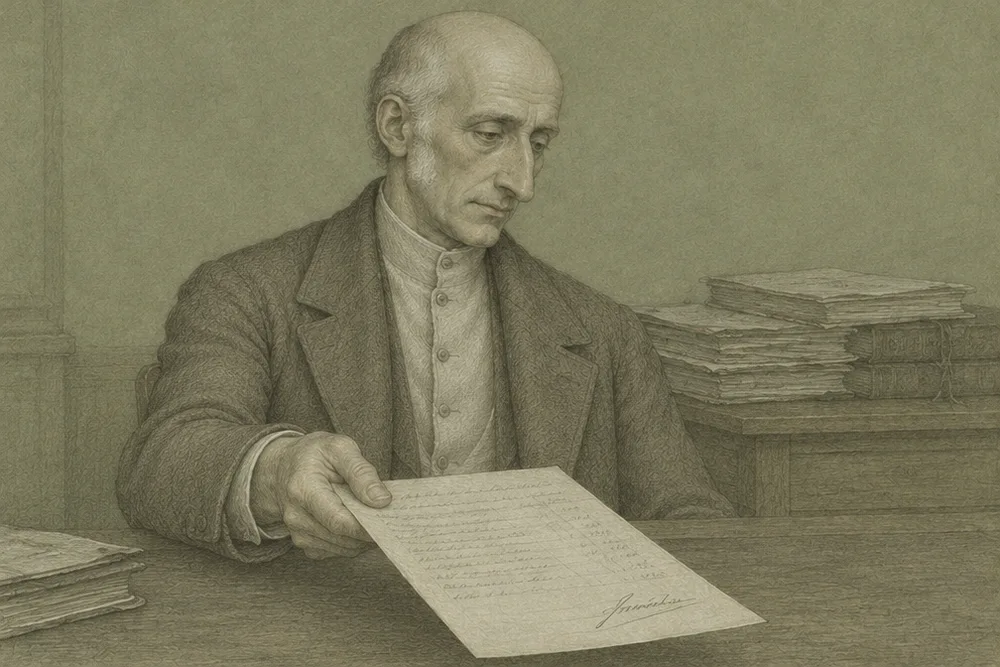
He wrote the terms on the account sheet, then signed at the bottom. The signature was thin and slanted, the ink dark where the nib had paused. He held it out to her. Flavia read every line before folding it into her pocket. A permission to measure was not wages, but it was not nothing.