The Road That Ended at Home
Page 82 of 276
Chapters
Agnese resumed sewing. The stitch entered the cloth and emerged on the other side, holding two edges together without making them one.
In the morning, the names took longer to check than they had taken to write. Flavia walked the lanes with the register under her arm, calling at each door and reading the entry aloud. Some occupants corrected a spelling; others wanted the children listed first, or objected that a cousin who had gone to work upriver was no longer part of the house. She marked each alteration in the margin instead of scraping away the first account.
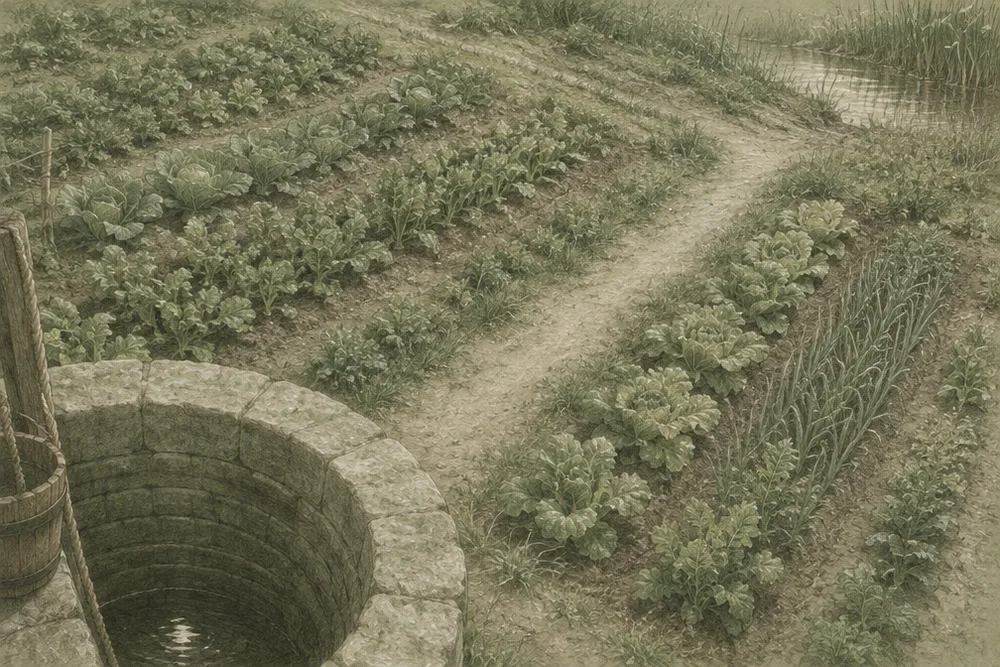
At the well behind the vegetable plots, Rina waited beside two women carrying baskets. The water stood low in the shaft. One of the women, older and narrow-shouldered, said she came to the well only when her neighbor could spare a bucket. Flavia added the arrangement, then asked how far the woman walked on days when the neighbor could not.
“To the canal,” she replied. “But the path is bad when the bank is wet.”
Rina pointed out the path, a thin track between rows of greens. It would be crossed by the route marked on the draft plan. Flavia drew a note and measured the width with her chain. The track did not appear on the survey sheet. The omission seemed small until she pictured an old woman carrying a full bucket over the proposed cut.
At the next dwelling, a man refused to give his name. He said the landholder had told him not to sign anything connected to the drainage works. Flavia did not ask him to sign. She wrote “occupant, name withheld” and the number of the door, then recorded that he had been present and had declined to identify himself.
“That makes it sound like he has something to hide,” Rina said when they were out of earshot.
“If I invent a name, I would be hiding it for him.”
“And if the office says the entry is worthless?”
“Then it will be a record of what I saw.”
They walked back by the plots. Women were at work among the beds, lifting weeds and guiding shallow water from one furrow to the next. Their paths crossed and recrossed the neat proposed feeder line in Flavia’s memory. A plan could not show every footstep, but it had to show the paths a household depended on.
Near noon, she completed the checks. The register now held fewer guesses and more distinctions: seasonal residents, long-term tenants, permitted occupants, unnamed householders. She attached the door sketch and copied the title of Agnese’s ledger onto the cover sheet.