The Road That Ended at Home
Page 255 of 276
Chapters
Rina bent to right a pail that had tipped on its rim. “If you stay, don’t make it sound as though we asked you to. We asked for water. We didn’t ask you to live on hope.”
“I know.”
“Good.” Rina stood, pigeon-toed, and brushed the grit from her rolled sleeves. “Then make the office pay for the days it needs you. A person cannot drink a promise.”
Flavia looked toward the water issuing from the brick mouth. The new channel carried it to the same place, at the same level, no matter whose name was written in the ledger. But the ledger determined who might reach it and in what measure. She would not mistake the two things again.
At the inspection, the commissioners came in a hired cart from town. There were three of them: a district official with a polished cane, a clerk who carried the schedule in a portfolio, and an older man who had served on the commission since the first embankment stakes went in. Vezzi met them at the chamber with the completed plan. Flavia carried the level and field book. The clerk looked at her, then at the instrument, then wrote her name on the attendance sheet without asking who was to hold the staff.
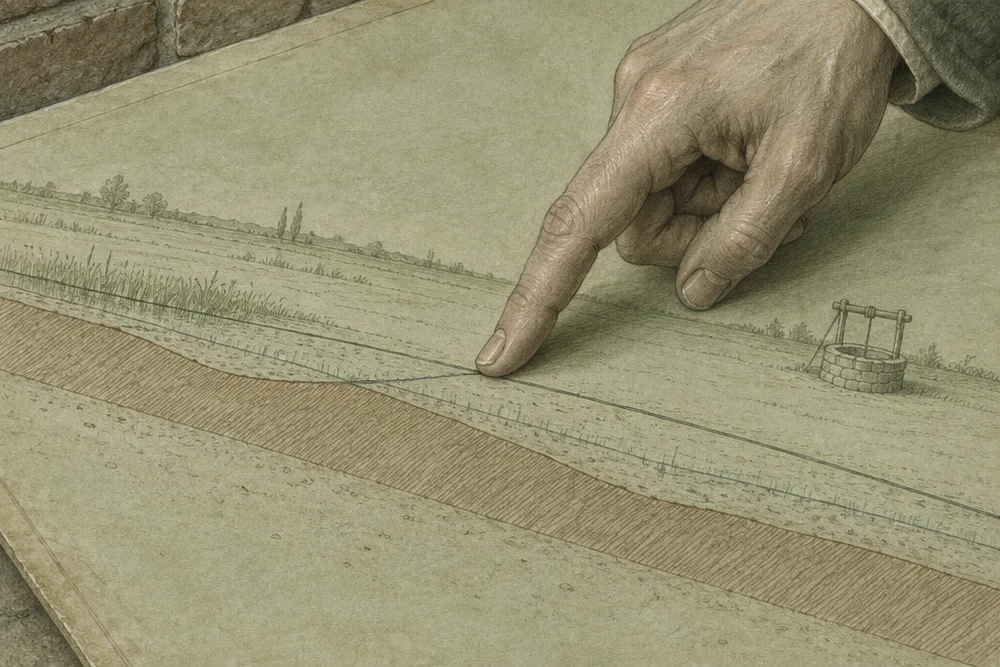
They checked the chamber’s floor, the feeder fall, and the water’s passage through the outlet. One commissioner asked why the public drawpoint stood farther from the gardens than the first alignment. Vezzi explained the clay seam and the failed trial. Flavia showed the relevant section, with the clay marked in brown hatch and the well beyond it. The commissioner ran a finger down the drawn line.
“So this recharge route would not restore the well?”
“It would not provide reliable drinking water to that well,” Flavia said. “The trial clouded it but did not raise it. The separate drawpoint supplies households upstream of the seam. It does not promise that every shallow well will recover.”
Rina stood behind the carriers at the edge of the group. She said nothing. Her garden plot, diminished by the lost strip and the reduced irrigation allotment, was visible beyond the path. The water in her well had not returned. The commission could accept a working public supply without pretending that it had repaired every loss.