The Road That Ended at Home
Page 209 of 276
Chapters
The wording had been altered since Vezzi first spoke. It made the position sound settled, respectable, almost generous. There was no mention of witnesses. There was no mention of the carriers, the growers, or the margin Flavia had filled with conditions.
“If I sign, the public schedule still stands?” Cesare asked.
“The schedule is attached,” Vezzi said. His hand rested near the seal, not on it. “The commission expects the keeper to administer it.”
“Alone?”
“The attendants will assist.”
“Assist is not witness.”
The clerk shifted his boots. He was young, with a smooth face and a red scarf tucked into his collar. “The wording is standard.”
“The water is not standard,” Rina said from the office doorway. She had come back to collect the copy for the washstones. “Neither are the people.”
The clerk’s eyes went to Vezzi, seeking the right authority. Vezzi gave none. Instead he took a pen and drew a line through sole custody. The clerk started to object, but the engineer held out his hand for the paper.
“The commission can countersign a rider,” Vezzi said. “Two rotating attendants. A witness from the drawing households when the schedule changes. The key remains in the keeper’s charge between turns, but the gate cannot be opened except under the posted rule.”
Cesare studied the amended line. “And the attendants can stop me?”
“If the measure exceeds the mark, yes.”
“And I can stop them?”
“If the bank or the water level is unsafe.”
That was better. Not equal power, perhaps, but a check in both directions, with the reason written down. Cesare pictured a winter flood, a split bank, a row of people demanding their turn while water climbed the road. A rule could not make judgment unnecessary. It could make judgment answerable.
“I’ll take it to the carriers and growers,” he said.
The clerk let out a breath. “You mean you will not sign?”
“Not until they hear it.”
“That may delay your appointment.”
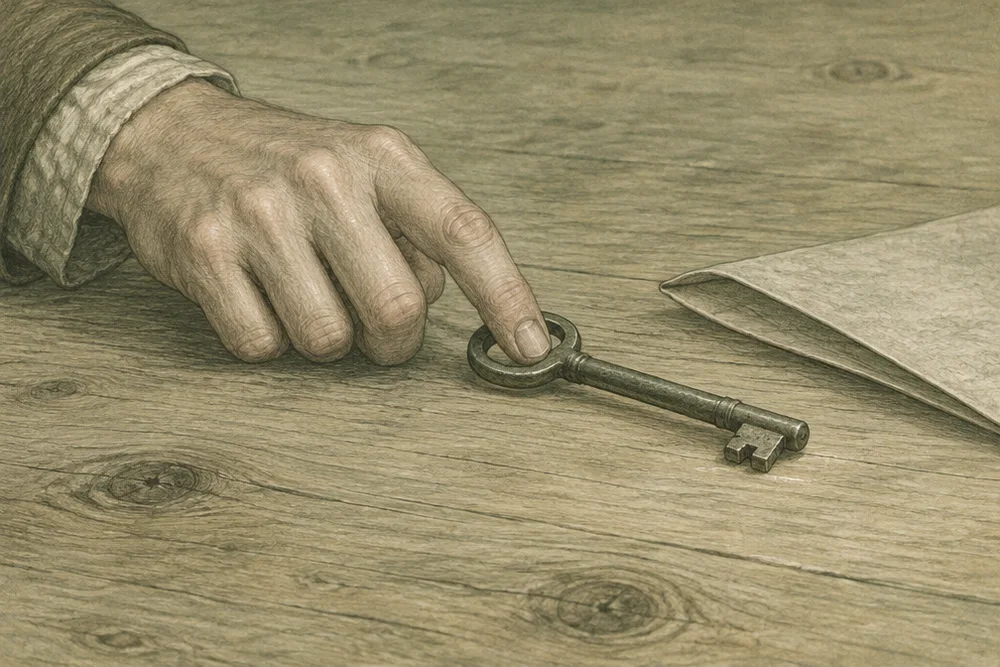
The clerk set the old iron key beside the appointment. Cesare drew the key toward the middle of the table, where everyone could see it. “Then the gate can wait with me.”
They met again at the washstones, where the water left a pale scum along the trough and soap clung in the cracks between the stones. Women had brought bundles of linen to rinse. The carriers had put down their yokes. Two growers arrived with mud still on their boots, and a pair of men from the western lane stood at the edge of the group, silent until Rina called them nearer.