The Road That Ended at Home
Page 200 of 276
Chapters
“The gatehouse is already contracted,” Bassi said.
“Not the stone panel,” Vezzi replied. “And not the roof. We can retain the gate and omit the ornament.”
“The contractors will claim for the alteration.”
“They will claim less than the mason and timber required for a shelter.”
Flavia looked toward the road. The carriers’ route crossed open ground now, but by the time the feeder was built its bank would rise between the gardens and the public standpipe. A path and crossing were not decoration. She wrote their dimensions in the margin while Vezzi argued over the gatehouse figures.
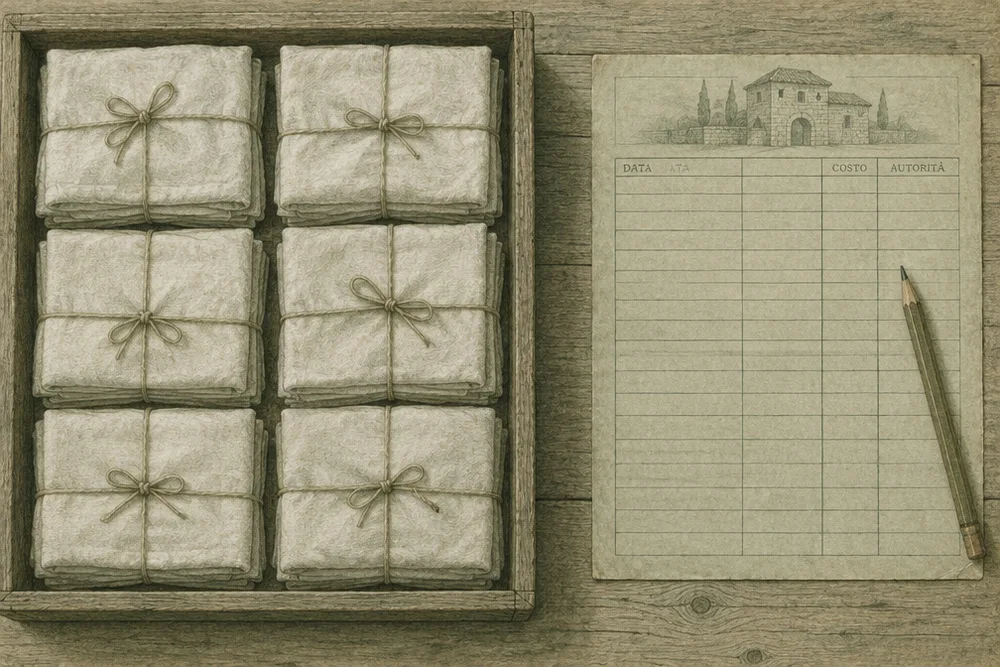
Agnese had gone to the workbench. She returned with a shallow wooden tray and set it on the plank beside the estimates. It held clean linen folded into exact rectangles, each tied with a strip of thread. “These are ready for delivery,” she said. “The yard earns on every bundle finished. It will earn nothing when the wall comes down.”
“We can include lost income,” said the official who had first asked about cost.
“For how long?” Agnese asked.
He looked at the page, as if duration might be printed there already.
Agnese named the season’s remaining work and the ordinary interval it would take to establish a new wash place. She did not inflate it. Flavia knew her mother’s accounts: each bundle entered, each payment marked, even when a customer paid in eggs or soap. Agnese’s figures were modest enough to make refusal look mean rather than prudent.
“A temporary allowance until the shelter opens,” Vezzi said. “And payment for the move before clearance.”
“Not after,” Agnese said.
“Before,” he agreed. “The tenant credits also before excavation on each lease.”
Bassi asked whether the commission could reserve money before the final engineering approval. Vezzi answered that the works estimate had a contingency, but it could not be spent without a written schedule. He began one then, carrying the figures from the field notice onto a proper form. The paper had a printed heading and ruled spaces for cost, date, and authority. He filled them in with his narrow, controlled hand.
Flavia watched the sum grow. A permanent post would have made those figures feel like a promise to her too. Instead, each line was an expense the commission could use to question whether her corrected survey was worth accepting. She had no wages waiting after the current inspection. Her coat was already gone. But the household had been put on the record, and the works could no longer pretend it would move itself.