The Road That Ended at Home
Page 191 of 276
Chapters
Agnese came in with damp hands and wiped them on her apron. “The woman has no yard.”
“No. There’s a back step for washing.”
“That is not a yard.”
“It’s the best place Nello knows.”
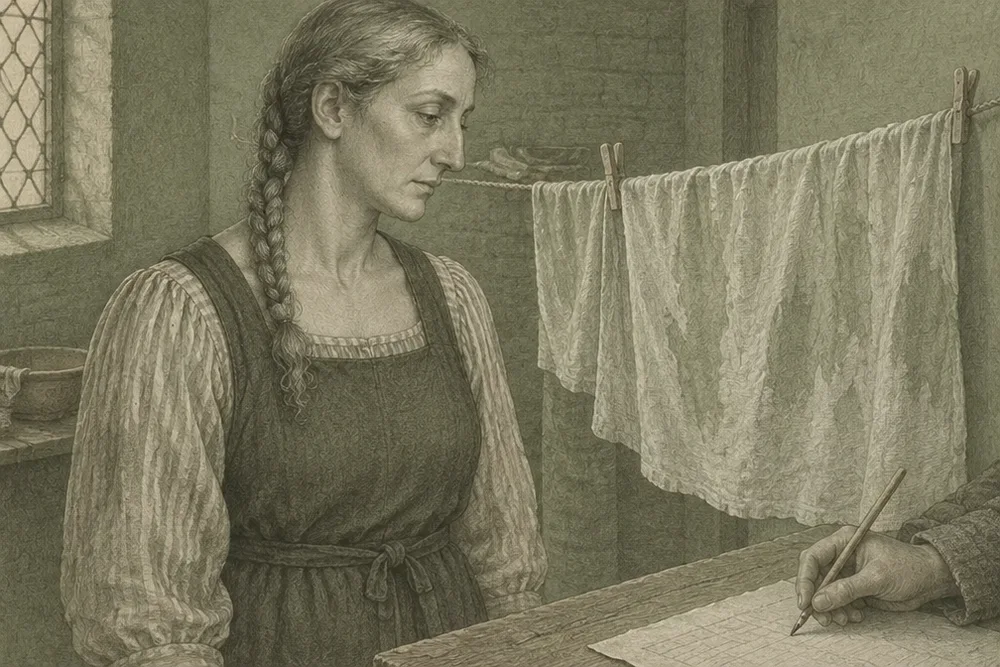
“Then we put down what is lost as well as what is found.” Agnese lifted the wet cloth from the basin and spread it across a line. “I earn from the space outside as much as from the room. Women bring work because I can lay it out and keep it from the road.”
Flavia added a line for yard use and for work interrupted. Her mother watched her write, not grateful, not reassured. Simply present, as the plan’s first version had failed to show.
That evening Flavia carried the estimate to Vezzi’s office. He was still there, sleeves protected, lamps lit against the gray light through the high windows. She placed the sheet beside the plan. The rent, first payment, two cart trips, lost washing days, and the use of the back step were listed in separate lines. Nello’s account of the western lane was noted at the bottom, so no one could price the move as if a cart might come through the marsh.
Vezzi read the figures twice. “The rent is reasonable. The cart charge is not excessive. The interruption of earnings will need proof.”
“My mother’s customers can name the days they leave work with her.”
“That may help.” He tapped the last line. “A yard-use payment is harder to establish. The residence is on public land.”
“The work is not imaginary because the ground is public.”
“I did not say that it was.” His eyes lifted. “But I have to separate the removal allowance from any claim to ownership.”
“We are not claiming ownership. We are claiming the cost of moving from a place where we have lived and worked.”
He rested one hand on the sheet, holding it still. “The commission will resist a precedent that turns every occupation into a property claim.”
“Then write that it is an allowance for removal, not a purchase.” Flavia kept her chin level. “The register already says we are occupants. The plan needs to say what the works do to occupants.”
Vezzi looked back at the estimate. For a long moment his face gave nothing away. Then he drew a small mark beside the lodging and cart figures. “I can present these as a necessary cost of the revised works. The commission may reduce them. They may require proof of each item. I cannot secure payment tonight.”
“I understand.”
“Do you?”