The Road That Ended at Home
Page 111 of 276
Chapters
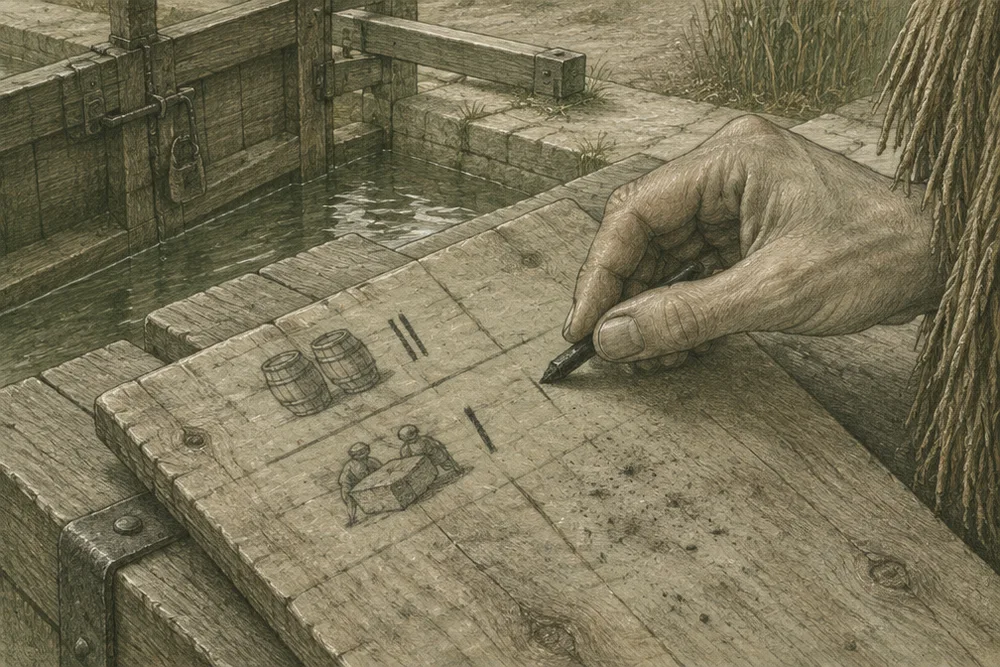
He thought of Flavia at the table with her sheets spread flat, holding a ruler against lines that led to actual doors. She had not treated the old tollhouse as an empty mark once she understood who lived there. She had not erased the public road reserve either. She had written both truths down, and the writing had made the easy estimate impossible. He had recognized the tollhouse line from the first day. The road reserve bent at the old stone notch; he had walked it when he was a young man, carrying a shovel to clear reeds from the drainage cut. He had known where the benchmark belonged, or had known enough to suspect. When he insisted on accompanying Flavia, he told himself he was there to protect the instrument from the peat and the girl from bad footing. He had also hoped she would turn back before the westward bearing reached her own door. He had not wanted her to lose the post she needed. He had not wanted to be the man who told her her mother’s home was on public land. He had let her discover it alone, and afterward called his silence a kindness. The word had not improved with use. At the gatehouse, the watchman tested the wheel. It turned smoothly. Cesare stood a few paces away, hands empty. He could have told him that the water mark in the branch was not where it seemed, that a level reading taken after the morning flow would lie by an inch, that the brick culvert seeped only when the eastern channel ran full. He had spent years carrying knowledge in his head and calling it protection. Now that knowledge belonged to no one but him. A cart rattled over the embankment. Its driver slowed to look down at the dry channel. Behind it, a woman carried a pail along the path, keeping one hand on the handle and one against her hip. She glanced toward the locked sluice but did not stop. Cesare watched until she passed out of sight. Then he went to the storehouse and took the old tally board from its nail. He could not open the gate, but he could write down the turn that had been given, the turn that had been sold, and the turn that had gone to the people with no barrels. He set the board on a crate and found a piece of charcoal. He began with the Bellandi allotment. Under it he wrote: two barrels, sold to the inn. Beneath that: carriers at washstones, small measures, one turn each. The list was not a ledger, and the marks were not official. But for the first time, the water’s passage was visible outside his memory.