The Last Dry Address
Page 86 of 257
Chapters
“You’re not making this easier.”
“I’m not trying to.”
He rubbed his thumb across the brass key on its cord. “When I audited the index, I treated a copied schedule as corroboration. The schedule looked separate. It wasn’t. I don’t know yet what that did to the cases.”
“You do know it did something.”
“Yes.”
“Then write that too.”
He looked at her, hooded eyes steady. “I will.”
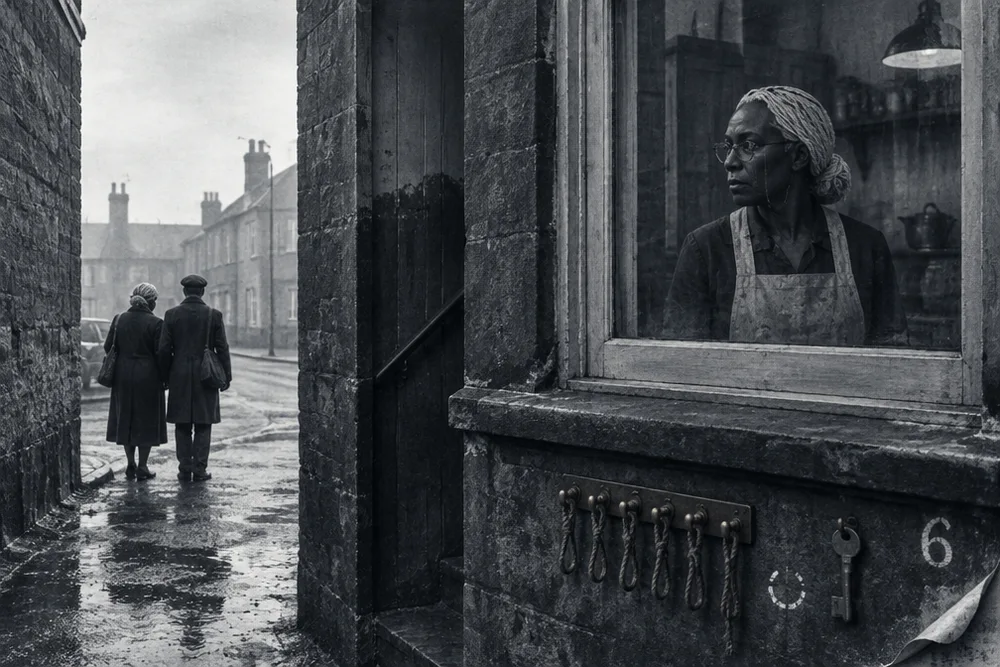
The cart moved. Tamsin and Idris crossed the lane toward the street. At the corner, she turned back. Mara had reappeared at the front window, speaking to someone inside. Her posture was still, lips pressed, as if she were standing between the two exits even from across the street.
“The original stays with her,” Tamsin said.
“For now.”
“No. It stays with her unless she chooses otherwise.”
Idris stopped on the curb. “That distinction may matter.”
“It matters to her.”
A ferry horn sounded from the basin, low and brief. Tamsin’s shoulders tightened before she could stop them. Six winters ago, that same kind of sound had meant a boat turning back. She could remember which one, which run, and the people waiting at the landing; she could not make the memory into a page that would prove every detail. The county had already learned to treat a page as an answer. She would have to make them see where it stopped.
They walked toward the claims annex. Tamsin kept the chalk in her cuff, though she had no work there and no reason to mark anything. Her father had taught her to leave a tool where she could reach it: a wrench on the winch ledge, a chalk stub in a pocket, a spare length of white boot lace looped over a hook. He had slept in the workshop because his work kept him close to the machinery; the water line crossed the interior stairs above his old sleeping shelf. None of that was on the county list.
“If the heading is yours,” Idris said, “the board will ask you what you intended.”
“I’ll tell them what I remember. I’ll tell them I can’t prove the rest from memory.”
“And if the handwriting comparison is inconclusive?”
“Then it’s inconclusive.”
He looked ahead, not at her. “You’re risking the strongest evidence you have.”
“The heading is not evidence of where my father slept.”
“It may support the interpretation of the sheet.”
“It also makes me part of its history.” She felt the broken tooth catch her lip again. “I won’t use it like it came from someone else.”