The Last Dry Address
Chapter 3 · A Bed Behind the Lathe
Page 24 of 257
Chapters
At 6:45, the Silt Room smelled of wet wool, rope dust, and the bitter coffee someone had left to skin over beside the audit boxes. Tamsin stood at the counter while Idris Pell drew a sheet from a folder and held it by the corners, careful not to tear the curling edge. Behind him, seven old rope hooks cast narrow shadows on the wall. His flat brass key swung once against his cardigan as he leaned forward.
“Ten minutes,” he said. “Then this goes back in its box. I have to finish the handover.” His left knee stayed stiff as he shifted his weight. “This is the carbon I found in the wrong drawer. Your notice cites the index number.”
Tamsin recognized the address before she recognized the paper: Crook Winch Court, the workshop row where her father had repaired winches and slept on a shelf above the shop floor. She bent close. The line was cramped, written over a pale smudge. Beside it sat a number, then a short mark like a bent hook. No name.
“That’s where he lived,” she said.
“It’s an address on a list.” Idris turned the sheet slightly toward her. “The index calls these properties that stayed dry.”
The heading had been cut away. A ragged strip remained above the first row, with two punch holes and a line of faint lettering at the edge. Tamsin saw the curled corner, the black impression of writing that had passed through another sheet. The paper was old enough to be brittle, and the list had been copied often enough to lose whatever it once said.
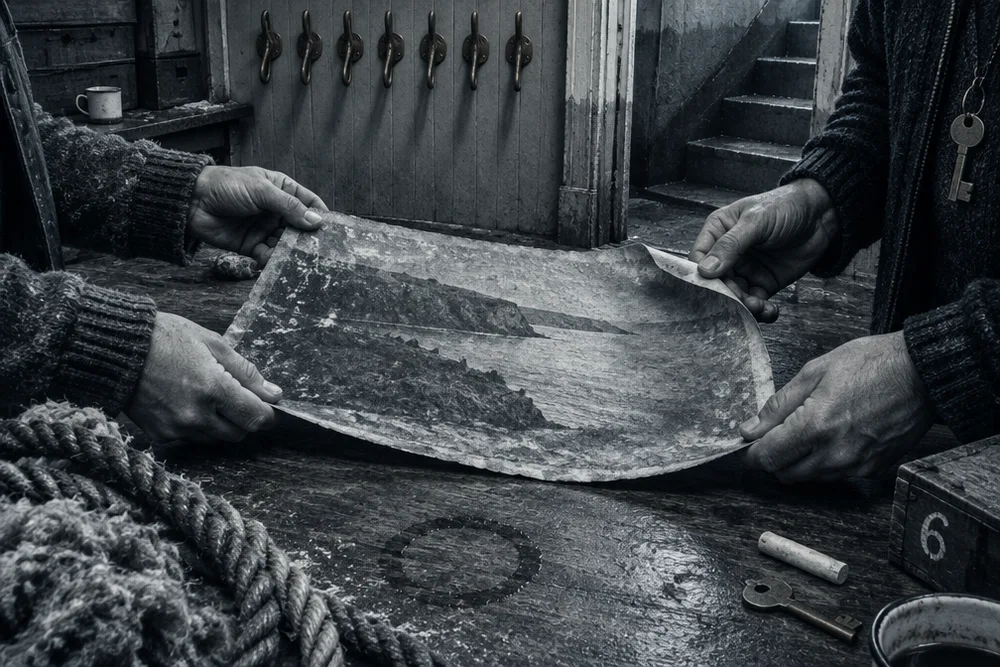
“There’s no name,” Tamsin said. She traced the air beside the entry without touching it. “But the court is exact. That’s his workshop.”
“The denial names the same court. It says the household had no qualifying dwelling below the water mark.” Idris set a second paper beside the carbon: the copy of the county denial she had brought with her that morning. “It doesn’t say this sheet proves who slept there. The index may have supplied that meaning.”
Her father’s rent receipts had named the workshop lease, not Oren. That was the trouble she had brought to the depot hatch: a business name where a household name should have been. She had expected the old paper to bridge the gap. Instead, it left the same blank between place and person.
“Can I take it?” she asked.
“No. It’s a county record in my custody.” He sounded tired, but not unkind. “I can let you read it while I’m here. You can make a note of what you see.”