The Last Dry Address
Chapter 16 · The Machine Goes First
Page 196 of 257
Chapters
The lender’s notice was folded into thirds, though the words inside needed no help fitting into the space. Tamsin read it once at the shop counter, then again with her thumb pressed over the date, as if the date might be the part she had misunderstood. No extension without an award notice. No further credit against a payment now held for review. The note came due whether the county finished listening or not.
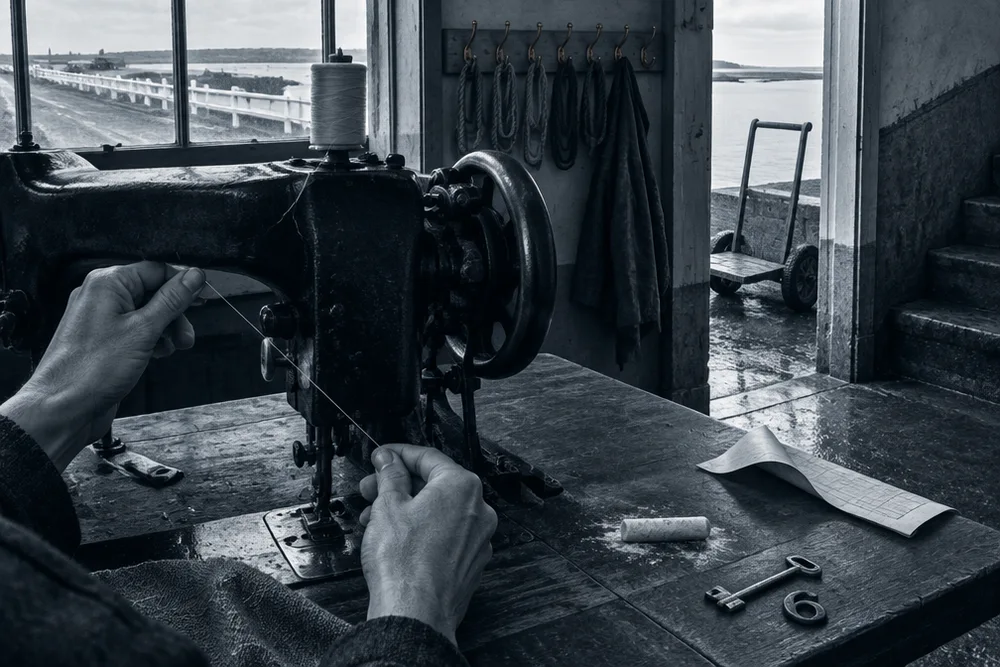
Outside, the causeway carried traffic over the basin where the ferry used to run. From the shop window she could see the new road’s pale railings and, beyond them, the pewter water. Inside, the industrial sewing machine filled its table, its heavy wheel still dark with oil. She had borrowed against Oren’s expected award to keep this room and this machine. The award had been meant to settle the debt he had left her; she had made it into a promise to keep working.
She tried the lender by telephone. The clerk at the other end did not sound pleased to refuse her. He sounded practiced. “If you have a notice today, bring it today. If not, I can’t hold the account open.”
“The county has put the payment on hold.”
“Then the account is on hold too,” he said, and apologized as if apology were the last service his office could provide.
She set the receiver down and looked at the machine. It was the best thing in the shop and the thing that would go first. The table could be sold separately, the hand tools carried, the bolts of cloth packed into crates. The machine was different: a single buyer would take it, and the shop would lose the work it had been built to do.
A dealer from the upper terrace came before noon, walking around the machine with his hands behind his back. He tested the wheel, checked the foot pedal, and asked whether the feed dog caught on thick seams. Tamsin demonstrated on a scrap of sailcloth. The needle drove through it cleanly, the machine’s rhythm familiar in her hands. The dealer offered less than she had paid.
“It’s worth more than that,” she said.
“It is, if you can wait for the right buyer.” His eyes flicked to the notice on the counter. “You can’t.”
She could have argued. Instead, she turned the scrap over and showed him the double seam, then named a figure between his offer and what the machine had cost her. He shook his head. She let him go to the door before she called him back. They settled on a number that left the lender paid and no money to spare.