The Last Dry Address
Chapter 10 · The Paid Column
Page 116 of 257
Chapters
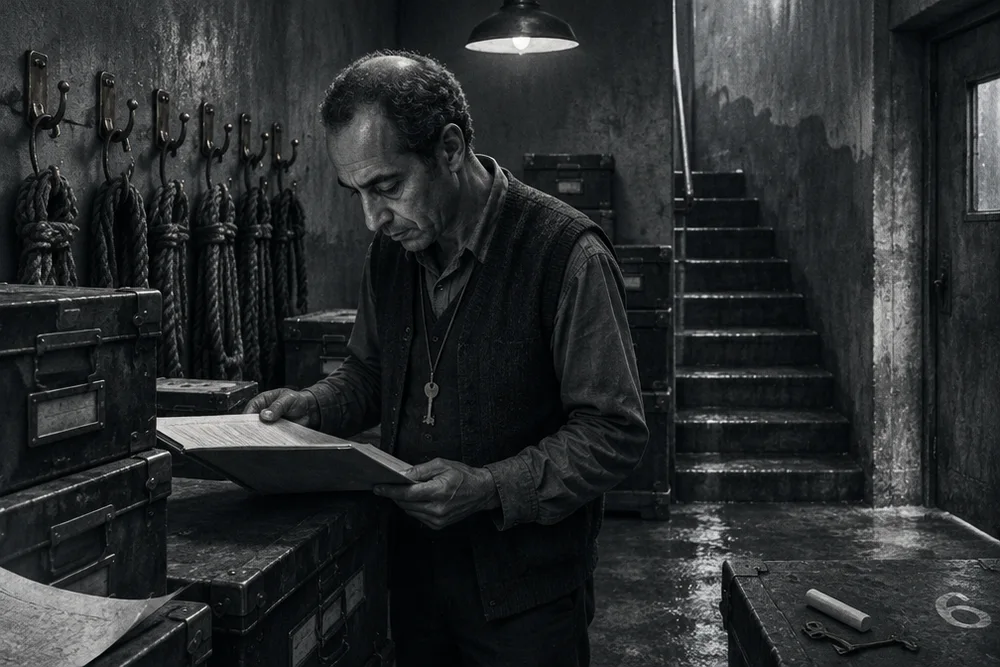
At 09:20, the Silt Room smelled of wet wool, paste, and the salt grit that came in on everyone’s shoes. Idris Pell stood between the audit boxes and the old rope hooks, his left knee stiff from the walk over, and opened the first approved folder in the sample stack. The county wanted a clean handover before noon. A clean handover meant every paid claim had a source, every source had a citation, and nobody could ask later why one paper had been trusted over another.
He was not looking for denials. He was checking continuity: the link between a household that had left the flood zone and the address where it had resettled. The manifest index had supplied that link in dozens of files. He had accepted it as independent corroboration when he audited the batch. Now the sheet’s route sequence and the ferry job jacket it came from had changed what the index might mean. He turned pages carefully, keeping his flat brass key from swinging into the paper.
The first folder’s award had been paid. Its household’s old address was absent from the flood register, but a host address appeared in the continuity field. The later lease matched that address closely enough to satisfy the rule. Idris ran a finger down the citation chain. A ferry manifest had been copied into an index, then the index cited as confirmation that the manifest meant what the index said. The chain looked tidy until he asked whether either link had ever been independent.
He opened another paid file, then a third. The pattern did not repeat neatly. One household had been recorded at a boardinghouse; another at an uphill address with a brass numeral he knew from the manifest. In each, the host location bridged a gap between the missing home and the later lease. That might have been sound evidence. It might also have been a clerk reading a list of places that took evacuees as if it named places that stayed dry.
Idris drew a blank sheet and made columns for household, cited address, later lease, and source. His handwriting narrowed as the cases accumulated. The paper was already becoming a map of dependencies, but he kept the names out of the margin where anyone walking past could read them. A claimant’s file was not a puzzle left on a public table.