The Last Dry Address
Page 26 of 257
Chapters
“I wouldn’t ask you to say something you didn’t see.”
The tenant opened the door wider. “You can take a picture of the shelf. No picture of my tools, no paper with my name on it, and I’m not signing a declaration.”
“Agreed.”
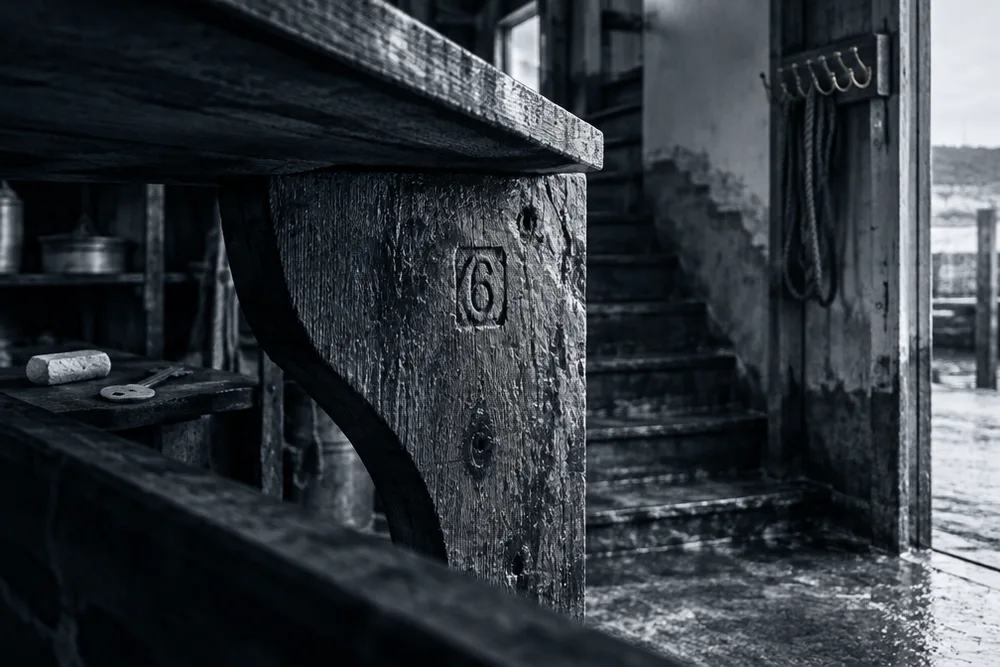
The shop had narrowed since Tamsin remembered it. A workbench stood beneath the front window; the lathe occupied the center, its belt removed and coiled on a peg. The high interior stair ran up the back wall. A dark wet line crossed it above the level of the sheltered door jamb, the old flood’s reach still visible where paint had flaked away. The shelf sat above the lathe, tucked against the wall under the stair.
Tamsin took out her phone but did not raise it yet. “Is that the original shelf?”
“It’s the same place. I replaced the boards.” He pointed to the brackets. “Those were here when I came in.”
She climbed two steps, keeping her weight near the wall. The shelf was shallow, wide enough for a narrow mattress and little else. A timber brace beneath it bore a stamped mark, partly hidden by a nail head. She crouched to get a better look.
The mark was a square with a small wedge cut into one side. Tamsin knew it from her father’s invoices: the builder’s stamp used on the shelf installation. She pulled a paid invoice from her coat, one she had carried since the appeal began, and compared the marks without putting the paper against the wood.
“That’s the same stamp,” she said.
The tenant glanced up from the bench. “Does that prove your father slept there?”
“No. It proves the shelf was built.” She lowered the invoice. “That’s still something.”
She waited for permission before lifting her phone. The tenant gave a small nod. Tamsin took one photograph of the brace, then another that showed the shelf’s length and its position over the lathe. She kept the flood line on the stair in frame. The proof would be easy to misread if it showed only a plank and a mark.
“The county will say a shelf can hold anything,” the tenant said.
“They might.”
“And a person can sleep anywhere. Doesn’t make it their home.” He turned back toward his bench. “I don’t know who slept there before me. I wasn’t here then.”
Tamsin lowered the phone. “I understand.”
“Good. I’ve had people tell me what they remember about a place I rent now. They don’t ask whether I want my address tied to their case.”