The Last Dry Address
Page 17 of 257
Chapters
He looked at the sealed cases. The county’s receipt clock made the stakes plain: when custody changed, the annex would no longer be the place where anyone could casually ask what had been in a drawer. A clean handover was not the same thing as an honest one. He had been asked to complete an audit, not protect the appearance of completion.
Idris took a second slip and wrote the time, the folder location, the visible serial, and the name of the appeal that had cited a corresponding index. He did not call the sheet a manifest. He did not call it a survey. He described the object and its connection, leaving its function open.
At 07:02, he examined the carbon’s back. The type had transferred faintly through the paper, backwards and broken, with a series of impressions near the holes. He could not make out a complete word. There was no signature, no date, and no stamp that fixed its use. The marks suggested the sheet had once been attached to something else, but the holes alone did not prove what.
He returned to the index volume. A later clerk had copied the serial into the margin and added a reference to the flood-elevation schedule. The note’s ink was darker than the original entry. Idris placed a paper strip beside it, not over the writing, and marked the margin number. It might help trace the point where a description had become a classification.
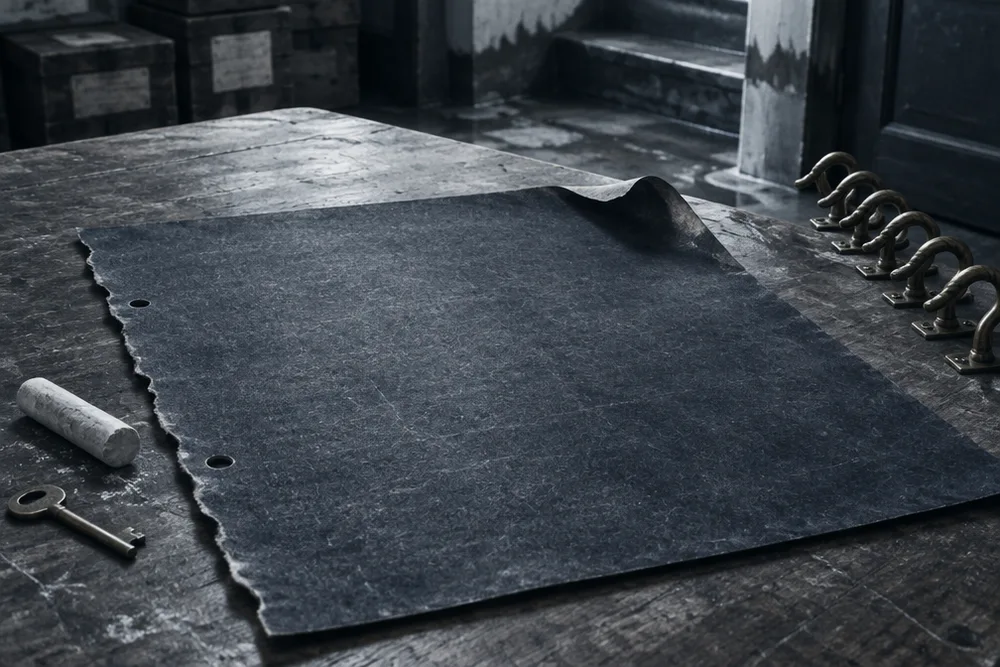
He did not write a correction into the bound index. Altering the source without preserving what it said would turn a question into a quiet erasure. Instead, he made a custody copy of the cited page later, when he could document it properly. For now he entered only the inconsistency in the audit notebook: index describes property schedule; surviving sheet has incomplete heading and unclear columns; serial overlaps; provenance unconfirmed.
A clean transfer recommendation was a small thing on paper. It was also the thing he had been working toward. His name would follow the boxes; so would the record of how he had handled them. Idris felt the old pull to make the day narrower: verify, tally, close. He put his flat brass key back under his cardigan where it hung against his shirt.
The knee stiffened again when he stood. He waited for it to ease, then carried the index volume to the shelf. He left the carbon on the table, not in the drawer, its curled corner lifting a little at the edge. The sheet had become an exception because of what he had done with it: compared it, connected it, and refused to pretend that its location explained its meaning.