The Last Dry Address
Page 128 of 257
Chapters
Nessa returned to collect the transfer receipt strip. Idris handed her the schedule but kept the folders in their separate piles. She scanned the total. “Thirty-seven,” she said. “Including the kitchen award.”
“Including it because the manifest link is doing work in the file. I’ve noted the additional record for review.”
“That is the right distinction. The hold will cost people time, even when the hearing clears them.” She rested one hand on the case. “You need to say that plainly. A correction is not weightless just because the old record was wrong.”
“I know.”
“Do you?” Her look was not unkind. “You can still find cases that stand without this source. Don’t protect the schedule’s neatness at the expense of the people inside it.”
Idris took the warning as an instruction. He reopened the first borderline folder and checked its attachments rather than insisting the source had to be central because his discovery had made it central. The additional rent receipt confirmed a payment to a landlord, not the name of the person who slept in the room. He kept the case on the list and explained why in the margin.
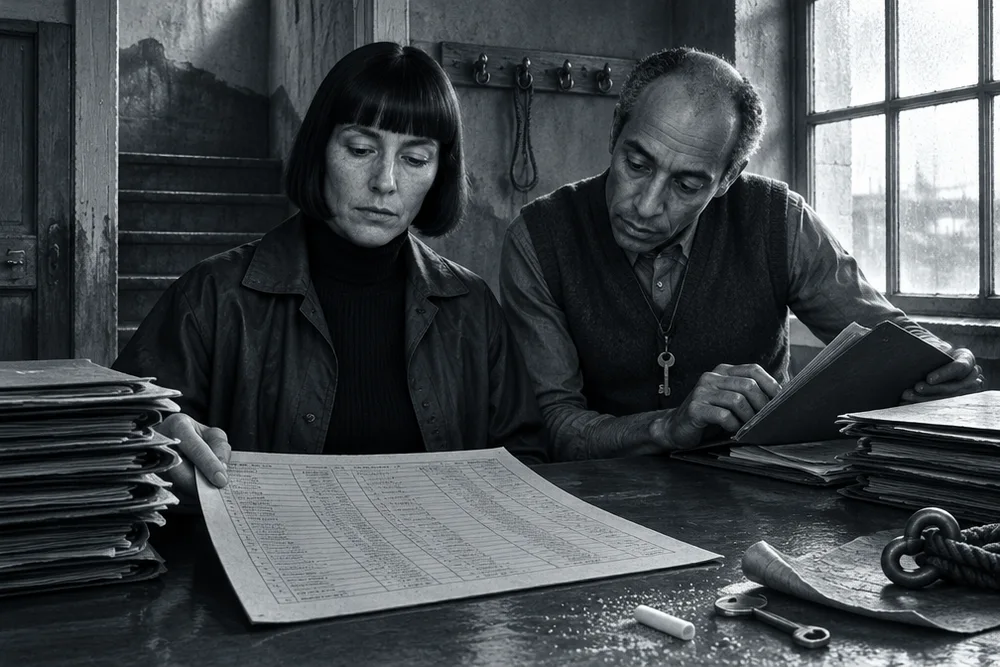
When the last citation had been checked, Idris fastened the schedule with a paper clip and placed it beside the unresolved folders. He did not seal the pile. The source challenge had not yet been docketed, and no hold had yet been attached. Until then, the names on the cases remained private working information, not a public accusation against the households.
The payment column in the county form was marked pending for each of the thirty-seven. Idris saw the neat row of boxes and thought of how little a mark could contain: a kitchen lease waiting on an award, a family waiting on a hearing, a clerk’s old assumption copied into a new file. If the challenge went forward, it would slow every one of those payments. If it did not, the claims could pass to the successor office still depending on a source whose purpose had not been established.
He took his flat brass key from its cord and used its edge to hold down the curled corner of the schedule. The page stayed flat under the key. The cases did not. He read through the list one more time, checking the count, then placed his audit notes beside it—ready to show exactly where the earlier corroboration had come from, and what he had done with it.