The Linen Ledgers of Marrow Quay
Chapter 9 · Redirection in the Daybook
Page 83 of 183
Chapters
By Thursday morning the fog had lifted from the quay but not from the water. It lay in torn strips between the piles beneath the sail loft, and the tide stair showed only its upper stones. Sabine carried the pilot’s box up to the harbor hall with both hands. Inside were three linen slips, each folded inward, and a chandlery daybook borrowed under a receipt that promised its return before noon Saturday.
The hall’s public gallery had been shut for the pilot. Ada Rusk had unlocked one committee room and left the other sealed; she would not be the only keeper of anything, she had said, and would not permit the names to become a spectacle. The room smelled of lamp oil and damp wool. A narrow table stood between Sabine and the two examiners: Ada, upright in her slate jacket, and Mr. Tern, a retired schoolmaster elected by the crews because he had no claim to any cottage.
Ivo Pell waited against the wall, tar-black vest buttoned to his throat, green neckerchief dark with mist. He held the selected sail himself. The crew had opened its doubled hem, removed the slips whose contributors had not agreed to the test, and brought the remaining pieces in a plain envelope. No one had surrendered the sail or its custody. Sabine had not touched the envelope until Ivo nodded.
“We are testing a rule,” Ada reminded them. “Not making a list of people.”
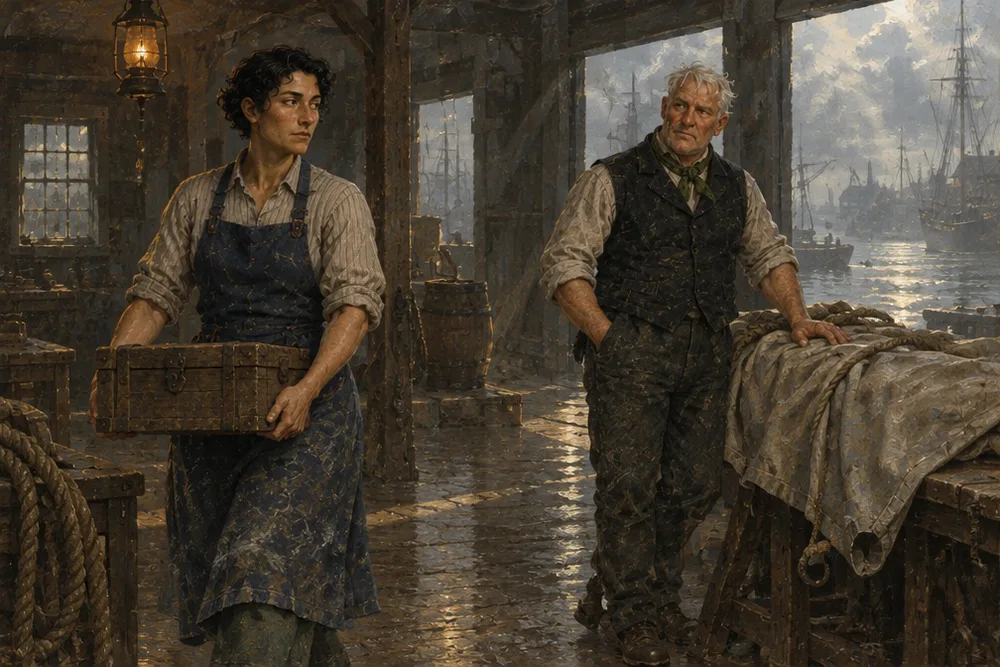
Sabine set down the daybook. Its leather cover was worn white at the corners, and its pages carried the chandlery’s orders in a clerk’s tight brown hand. On Tuesday she had thought the hems might prove a home by themselves. The thought had been desperate and convenient. Now, with the slips still folded and the room closed, she understood that evidence could be handled gently and still be made to do harm. She took out her pencil, but did not sharpen it.
The first slip bore a repair date and a short entry written in faded blue: a street, a number, and a household name. Sabine kept her finger on the blank margin, not the writing. Ivo unfolded it only as far as the contributor had permitted. The linen had been creased into quarters and stitched beneath the sail’s doubled hem; old needle holes ran in two parallel rows beside the newer seam.
“That date is the one to check,” Sabine said. She turned the daybook toward Ada. “Not the family name. Not the later note.”