The Linen Ledgers of Marrow Quay
Page 38 of 183
Chapters
He could see the notice from the loft: its black lines softened by fog, the company seal pressed hard enough to leave a bruise in the paper. Current permanent households, it said, must establish residence to claim first refusal. The wording made a home sound like a fact waiting obediently in a book. Yet the company had never put a field on its form for people who slept under another person’s name. Ivo knew Sabine did. He had watched her read the form twice, jaw set, then fold it small and put it away.
The notice had been nailed up at eye level beside the quay scale, where men stopped to weigh bundles and women paused with baskets. Its corners were already curling. People had read it with the same expression they used for a change in the weather: they could not prevent it, but they might yet learn what it meant before it arrived. The company’s Sunday deadline had made every conversation sound like a last one.
“If we lend nothing, they’ll say the village has no evidence,” Tom said.
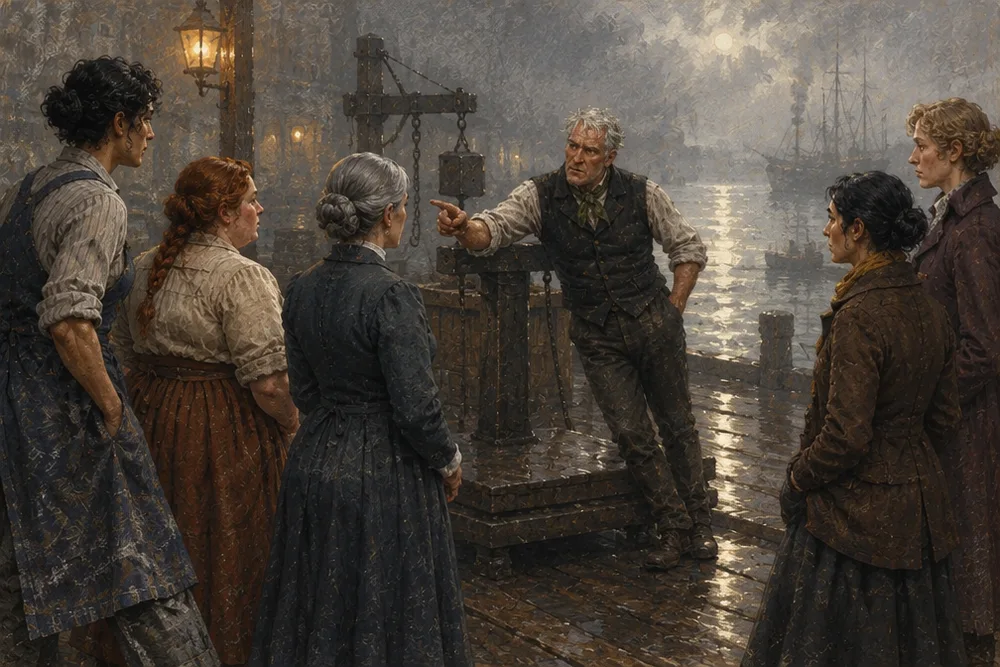
“If we lend it, they’ll say the evidence belongs to them.” Ivo leaned forward from the ankles, his broad frame balanced with a practiced economy. “A sail is not a cupboard to be emptied because a buyer wants to count what’s in it.”
The men made a low sound of assent, not quite a vote. Ivo let it settle. He had been keeper of the sails by habit first, then by agreement. A keeper was not an owner. He could say where a thing rested and who might touch it; he could not say its stories were his to spend.
“No display,” he said. “No lending. Not even a selected sail, not even with the names covered. We decide before any hem is opened.”
Tom rubbed a scar along his jaw. “And Sabine?”
“She can come and ask.”
“She’s already booked the hall.”
“Then she can unbook it.”
The answer sounded hard. Ivo did not soften it. He had seen what happened when a person who meant well decided that urgency was permission. A woman’s address copied into the wrong ledger could travel farther than she did. A man’s old testimony, meant to show that his family had lived in one place, might be read by someone who wanted to find where they had gone next.
At the loft stair, the apprentice boy watched them with round eyes. Ivo sent him to fetch the crew delegates from the lower quay. There would be a proper meeting, and the refusal would be made in company, not left to one old man’s word. Until then, nobody was to unpick anything.