The Linen Ledgers of Marrow Quay
Page 29 of 183
Chapters
The word no stayed with her through the afternoon. It did not tell her what to do with the slip, or how to make the company count the people it had chosen not to see. It only made the shape of the danger clearer. When the sail was patched and folded, she carried the linen piece to the high shelf in its clean scrap and placed it in a tin with her needles. The lid would keep dust off. It would not make the slip hers.
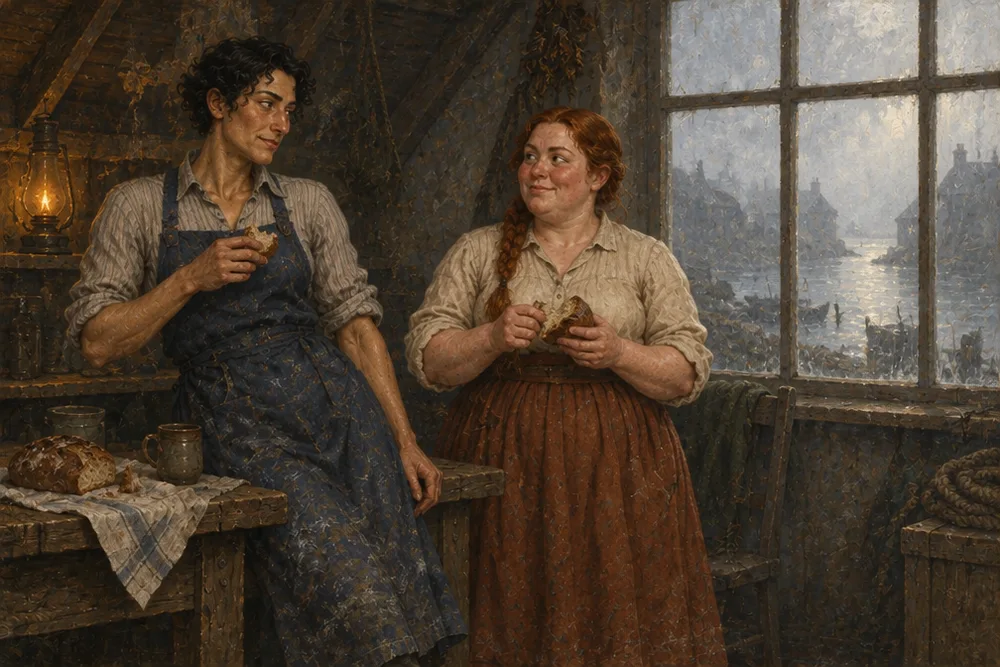
Mara arrived from the washhouse as the light began to thin, her copper braid pinned up and her rolled sleeves still damp at the cuffs. She set a tin of bread on the bench and surveyed Sabine’s work. “You’ve done no more than half the sails you promised.”
“One of them had a record in the hem.”
“A record of what?”
“I don’t know yet.” Sabine took a slice of bread. “Ivo says the crews have kept addresses and household histories in repaired sails.”
Mara’s eyebrows lifted. “And they’ll give them to you?”
“I haven’t asked.”
“Good.” Mara leaned back, heels apart, her weight planted like a wash tub on a floorboard. “You’ve already got a week’s worth of trouble without collecting other people’s.”
Sabine rubbed the heel of her palm where the sailcloth had scraped it raw. “The form does not have a place for an occupant who isn’t on the payroll. If there’s a record of the house—”
“You can’t make a house out of someone else’s name.”
“I know.”
Mara looked at her, and the sharpness in her face softened. “Then what are you thinking?”
That the records might turn an empty box on the form into a question the company could not dismiss. That a public demonstration might make the rule visible. That she might, if she moved quickly, use the hall before the company’s agent made the week feel shorter. Each thought seemed to arrive already carrying the cost of its mistake.
“People need to see what the company calls proof,” Sabine said. “Not the private names. The method. A dated repair, an address, another piece of evidence.”
“Who gets to say what’s private?”
“The people who put it there.”
“And if they don’t agree to show it?”
Sabine had no answer. She watched Mara break bread into small pieces, as if dividing it fairly could also divide the problem. From the loft window, the village cottages climbed above the quay, their chimneys dark against the evening fog. One week was not long enough to wait for permission, she told herself. It was long enough to try.