The Linen Ledgers of Marrow Quay
Page 164 of 183
Chapters
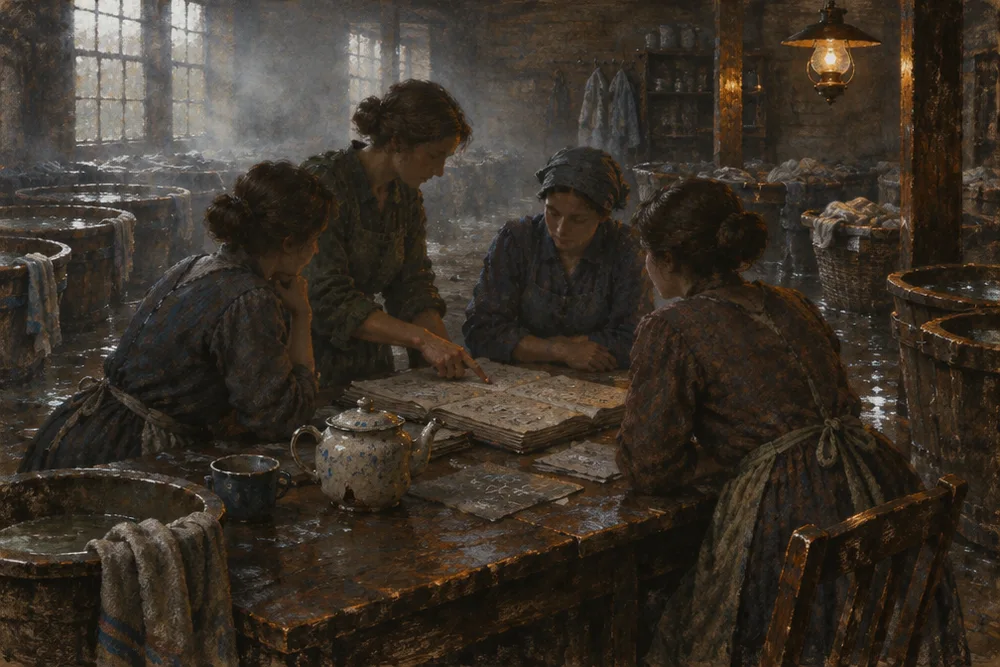
By noon the members had crowded into the washhouse, where the warm air made every voice sound closer than it was. The room had never been built for meetings. Tubs crowded the walls, and the long table held a ledger, a chipped tea pot, and the list of subscriptions Mara had gathered. Women who had put in shillings sat shoulder to shoulder with two dock laborers who had promised weekly installments. A few customers stood at the door, unwilling to claim a vote until they knew whether the rules allowed them one.
Mara stood with her heels apart, sleeves rolled, and explained the fence. She did not soften the fact that the buyer could keep them from the yard. She told them the washhouse purchase remained sound only if they could adapt: fewer loads at once, more indoor drying, and racks high enough to use the loft without blocking the chimney vent. The loft was low and dusty, its beams rough with old lime. The racks would take nearly all the reserve they had saved for a chance to buy back the yard.
“We paid subscriptions for a washhouse,” said Mr. Codd, a net-mender whose hands were cracked from brine. “Not a store-room for damp linen.”
“It will still be a washhouse,” Mara answered. “Only not the one we hoped to make.”
A woman by the door asked whether the yard could be rented by the season. Mara had already sent the question through Gideon Flett to the buyer. The answer had come back no. The buyer wanted the parcel clear, and his refusal was as neat as the fence.
Someone proposed borrowing against the members’ shares to make an offer anyway. Someone else reminded them that the company had set the price and the buyer had already taken title. Their voices began to climb. Mara waited until the argument came around to her again. She turned the ledger so the columns faced the room: money received, money promised, money still required.
“If we spend this reserve chasing the yard, the racks do not get made,” she said. “Then we own a building that can’t dry enough to earn its costs. I won’t ask you to risk the whole purchase on a boundary the buyer has already drawn.”
The room quieted. She felt the weight of every shilling in the ledger and the faces bent over it. “We vote on the racks,” she said. “Not because the yard doesn’t matter. Because this is the part we can still choose.”