What the Ledger Left Blank
Page 243 of 301
Chapters
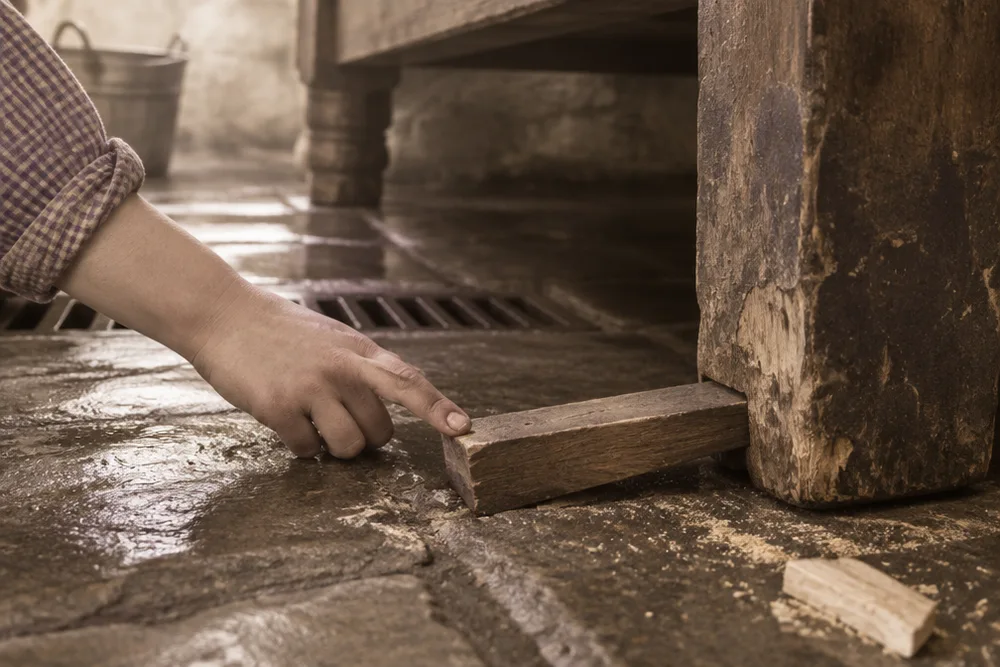
At the scullery, the caretaker had opened the yard door. The copper stood cold and empty; a grate waited beneath it, and a drain ran along the flagstones. Keziah measured the space available for the table and marked a place beside the wall. They set it down with a grunt. One leg rocked on the uneven floor.
Bess found the offcut and cut a wedge with the caretaker’s small saw. She tapped it beneath the short leg, then pressed her weight against the table. It held.
“There,” she said. “Now it’s a table again.”
“It was always a table,” Elspeth said.
“It was a table that rocked.” Bess dusted the sawdust from her hands. “That’s different.”
Tom unrolled his route list on the top. Keziah placed a stone on one corner to keep it from curling. They read the stops together, crossing out the distant lodging house and marking the two nearby streets they could serve without spending all their coal on carriage. On the margin, Elspeth wrote the price for the market aprons and the hour by which they must be ready.
The table would not make the scullery a full laundry. It could not make the copper burn hotter, or the hours longer. But it gave them a flat place where orders could be counted, work distributed and finished linen kept from the wet floor.
Elspeth looked at the empty ledger tin in Keziah’s hands. “We’ll need a book of our own.”
“A book for what we do,” Keziah said. “Not for what someone else has hidden.”
They did not go back to the steam laundry for the ledger. Jory had left it on the desk, beside the lamp, with the leather cover shut. The old customer names belonged to the orders he had taken; the entries of debt belonged to the business he was closing. Elspeth had no wish to inherit either. There had been a time when she might have thought a list of names would help her find steady work. Now she knew how readily a name could be made into a charge, and how often the person attached to it had never been asked.
That afternoon, she and Keziah returned to the laundry to collect the last of their own things. Jory was in the front room, speaking with a man who had come to inspect the boiler fittings. The buyer had a measuring rod and a leather case. He examined the pipes without looking at the sorting alcove. Steam had gone from the windows; without it, the room seemed oddly bare.