What the Ledger Left Blank
Chapter 21 · A Line Through the Debt
Page 215 of 301
Chapters
The notice had been nailed over the steam laundry’s counter, where the damp curled its lower corners away from the wall. Elspeth read it twice before taking off her gloves. Jory had written the figures in a firm, slanting hand: the balance due for coal, the rent of the premises, and, beneath those, the deductions owed to the workers whose wages he had withheld in December and January. He had crossed out each amount as paid. The last line, for Elspeth, still stood untouched.
She was not there to admire the arithmetic. Jory had sent word that he would take her on for a final week of sorting, at full piece rate, if she would come before the first customers arrived. He needed experienced hands, he had said. The steam laundry had lost two sorters to the fish market and one to a lodging-house kitchen. His orders had thinned, but he still had a closing run of shirts and table linen to finish before he gave up the boiler.
Elspeth set her gloves on the counter. Beyond the street door, a cart wheel rattled over the stones and went on. In the workroom, the boiler stood cold, its iron flanks streaked with old water. The sorting table had been pushed against the wall, leaving a clear passage between the tubs and the yard gate. Jory’s brown waistcoat hung loose over the watch chain at his belly. He rocked back on his heels as she came in.
“You’ve come, then,” he said. “I’ll pay the rate we agreed. No deductions. Not now.”
“And the old ones?”
His gaze slid to the notice. “I’ve paid them.”
“Not mine.”
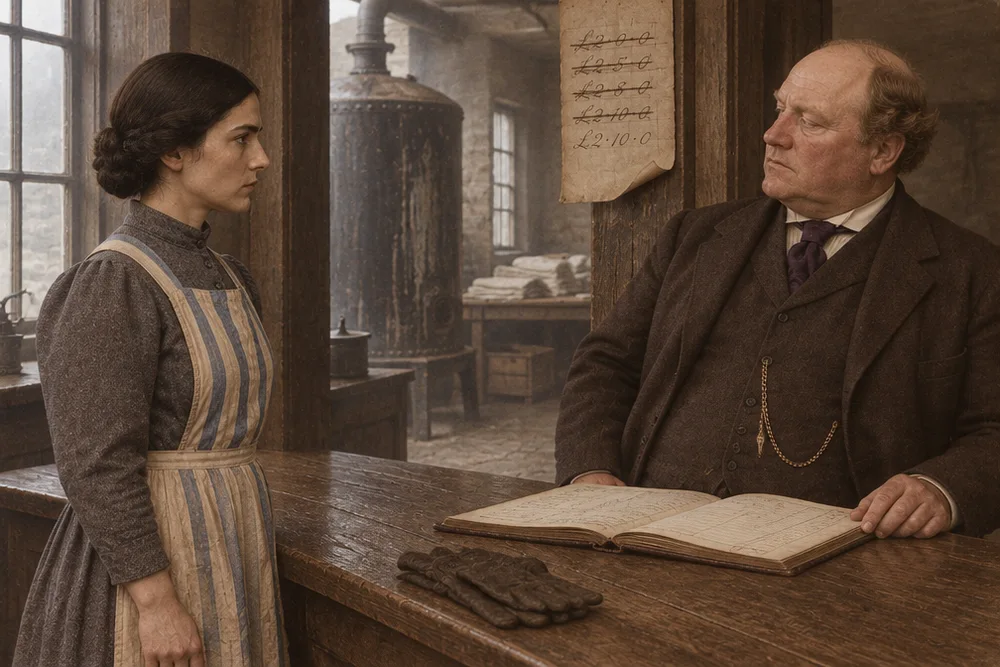
He blinked once, then pulled a ledger from beneath the counter. “Your name is there. You can see for yourself.”
Elspeth did not reach for it. “I’ll see the money before I take a sorting place.”
Jory’s mouth tightened, though his voice stayed measured. “You’ll be paid at the end of the week. Same as the others. I can’t start handing out money before the work’s done.”
“The money you kept for work already done?”
He looked past her toward the yard, where the last of the laundry’s carts stood with their shafts propped on a block. “I’m not asking you to trust me. I’m asking you to sort one week’s orders. I need your eye. You know how to tell a frayed cuff from a torn one, and how to keep a customer’s pieces together. It’s good work, and it’s paid work.”
“If I work, you pay me what you owe first.”