The Road Back to Number Nine
Page 80 of 208
Chapters
“The lower lane is still holding water,” he said. “Not much, but enough to soften the shoulder. We’ll have to keep the lorry off it.”
Pell looked up. “That does not change the closing schedule.”
“I didn’t say it did.” Sedge glanced toward Marta. “I need the numbers on the culvert sheet before I go back.”
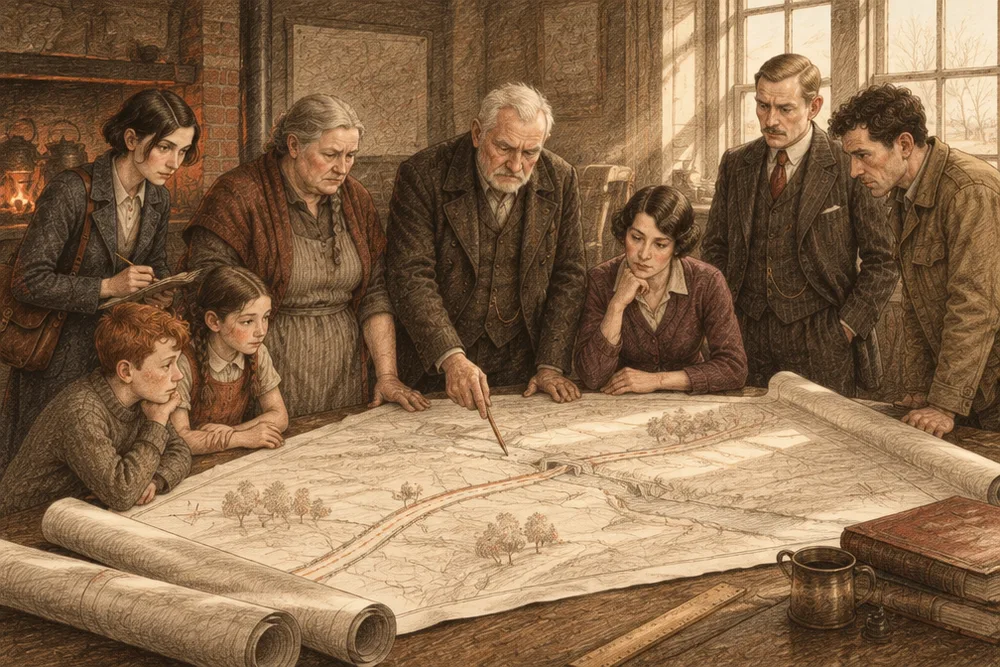
She brought him the correct plan. As he unrolled it, the old toll road showed in a paler line below the new climb, bending around the bank and joining the town road farther down. Marta remembered his earlier explanation of runoff: when rain cut a channel across the lane, the old stone ledge offered firmer footing. It was a narrow route, but it had brought them back to town when the survey cart could not manage the slope.
Sedge traced the culvert with a blunt finger. “This is the stretch. If the drain chokes, water comes straight over the road.”
“And under the bank?” Marta asked.
He glanced at her. “What about it?”
“The old rate book calls Number Nine a dwelling with a kitchen. The new survey labels it a shed.”
“The lower rooms are supposed to be dead space.” He rolled the plan’s edge back into place. “I saw the upper structure. It was empty.”
“Did you go inside?”
“The instruction was an exterior check. There was no reason to take the door off its hinges.” He spoke without irritation, as if she had asked whether he had measured the sky. “If the deed’s unsigned, it goes on the exception list. If the shed is empty, the signature is a matter between Rusk and the board.”
Marta heard the words as carefully as she heard Pell’s. “And if it isn’t empty?”
“Then the inspection should tell us.” Sedge picked up the plan. “Provided someone requests one.”
The question had been spoken before Marta knew she meant to ask it. Sedge did not wait for her answer. He tucked the plan beneath his arm and went back toward the gatehouse, leaving a faint trail of dried grit across the registry floor.
Pell’s office door remained open. Marta returned the rate book to him and pointed to the entry. “I think the property should be inspected inside.”
“On what ground?” He had begun sorting the morning mail. A brass letter opener lay parallel to the edge of his desk. “The old description is not evidence of present occupation.”
“It shows there was a kitchen below the shed.”