The Road Back to Number Nine
Chapter 7 · A Tongue Beneath the Blotter
Page 77 of 208
Chapters
The Number Nine deed lay beneath the blotter, its corner showing like a tongue. Marta had put it there to keep it flat, though the paper had been flat enough when she brought it in. Every time she lifted the blotter to reach a form, the deed appeared again: a thin reminder that all the other cottages and sheds on the valley list had found their proper places except this one.
Outside the registry windows, Brackenbridge went on with its September business. A coal cart rattled over the stones. Two women crossed the square carrying pails from the standpipe, their lids tilted to keep out dust. Beyond the roofs, the new road climbed toward the resettlement cottages and the unfinished dam. The board’s notices called the reservoir a public necessity. The notices did not say what happened to a place left between a property number and a human life.
Marta had seen Number Nine from the road during the survey circuit with Sedge. Low timber walls, a patched roof, a door shut against weather. It had seemed the very shape of an empty shed. Abel Rusk had signed for his uphill cottage, taken the payment, and left the separate deed for Nine untouched. When Marta offered it, he had asked what the board owed a person who owned nothing. She had not found an answer before he took his hat and went.
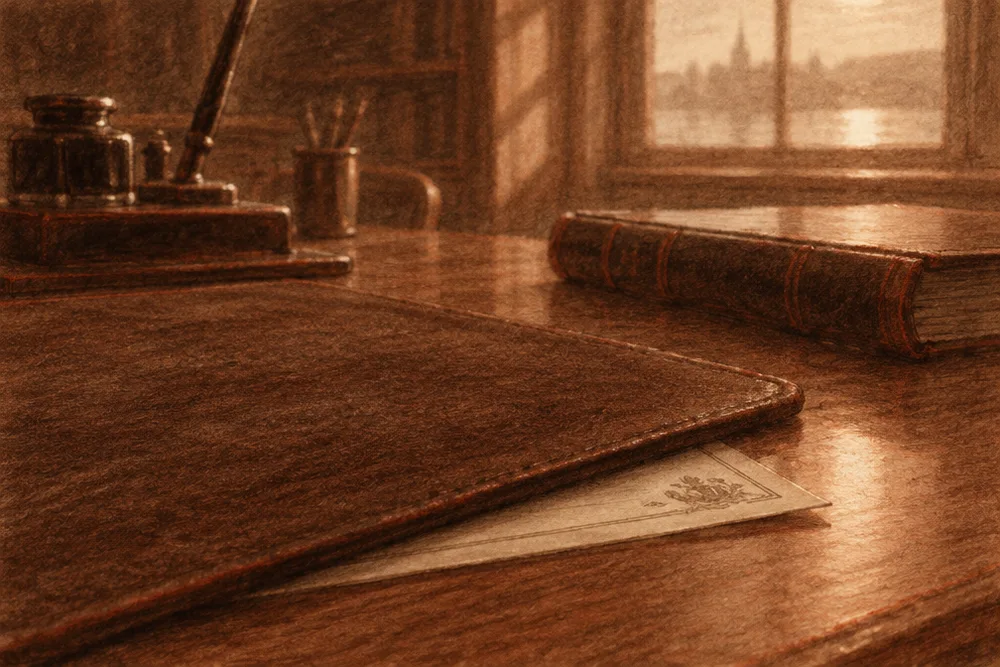
The deed now waited for him again, or for the clerk who would mark it unresolved. There was no such box on the surrender schedule. Under the heading CLEARANCE, the choices were SURRENDERED, VACANT, and NOT APPLICABLE. Marta had learned that a form could make a difficulty disappear by refusing to give it a name. She had also learned that a name, once written into the public register, could bring a difficulty through the door.
She sorted the morning’s papers into their carbon-copy trays, taking care not to smear the damp violet ink. A stack of notices for the last valley properties stood at her left; to her right, Pell’s pencilled schedule showed the sequence in which the gatehouse expected the clearances. Nine was the final line. Its blank spaces for signature and date sat between a cottage surrender and a note about a culvert.
“Still nursing it?” asked Mrs. Greeve from the public counter. She had come to collect the latest rent receipt for her uphill tenancy and was leaning over the rail, her gloves buttoned at the wrist. “That old toll shed can’t be worth a morning’s worry.”