The Road Back to Number Nine
Page 170 of 208
Chapters
“They are not being held indefinitely. They are being held until clearance.”
His gaze lingered on her. “You know the distinction because you wrote the entry.”
“I know it because the rule says so.”
Pell returned the application to the tray. “Then we are both obliged to follow the rule.” He went back into his office, leaving the door open just long enough for her to see the final clearance sheet on his desk.
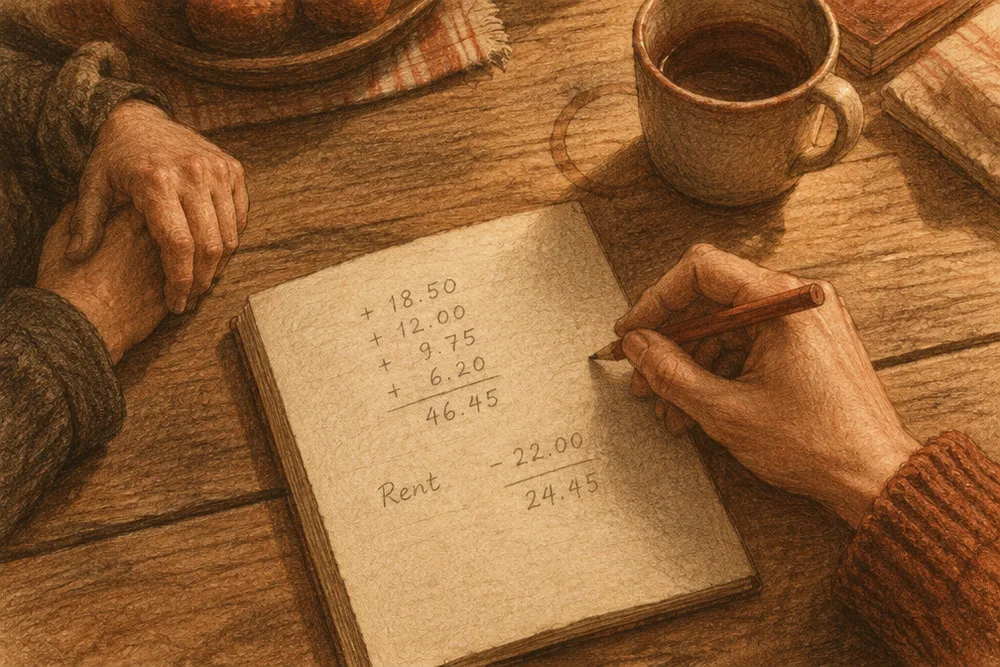
The waiting did not make the rent smaller. By afternoon the three women had spread their calculations over Nell’s table again, this time with Ada’s sewing receipts and the board’s schedule beside them. Marta sharpened her pencil with a kitchen knife. The shavings curled onto the floor like dry leaves.
Ada had brought the last two weeks’ earnings in a paper envelope. “The shop owes me for six shirts,” she said. “They will pay when the next lot is delivered. I can prove that much.”
“We cannot count money not yet paid,” Marta said. “But we can show an average from the previous months.”
“There were no previous months in which I had to feed three people and pay cottage rent.” Ada’s voice stayed level. “I know the numbers. I have been making them since my husband went.” She did not elaborate, and Marta did not ask. Each woman carried a private ledger of the things she had lost.
Nell set down a cup. “The workhouse would have given us a bed.”
“Separate beds,” Marta said.
“Separate rooms. Separate lists. I have not forgotten.” Nell pressed her thumb against the cup’s chipped rim. “I also have not forgotten that there is only so much we can promise.”
The rent left them with little after food and coal. Yet if they divided the cottage among five people, Ada’s sewing income could cover her share, and Nell’s small savings could bridge a bad week. Marta could earn the rest if she found steady copying. It was not security. It was a method of not being separated while they searched for it.
“If they accept us, we will pay on the first,” Ada said. “If they refuse, I will find somewhere for the children and me, even if it means taking a room over the shop.”
“The children need a school,” Marta said. Kit had asked her once whether moving uphill meant he would have to start again at a different school. She had not known the answer. Admission depended on address, and he had no address the board acknowledged.
“He can walk from the cottage,” Ada said. “If there is a cottage.”