The Road Back to Number Nine
Page 17 of 208
Chapters
At half past eleven, the public counter opened again. A man with a cap rolled between his hands asked for a claim form. He was spare and stooped, with the collar of his coat polished at the edge. He said he rented a bed in one of the cottages, not a whole room, and that the owner had told him the board would pay for his trouble when they cleared the valley.
“Have you received a notice?” Marta asked.
“I’ve had nothing.”
“Do you know the property number?”
“It’s the one by the bend, below the old toll road. Two doors from the pump.” He glanced toward the waiting queue. “I’ve lived there six years. Longer than the owner’s been in it.”
The counter clerk was sorting receipts. Marta reached under the counter for the printed claims leaflets. Their pile was gone. She searched the drawer, found one leaflet with a torn corner, and passed it to him.
“This tells you where to apply,” she said. “The board itself can’t assess an unrecorded tenancy here.”
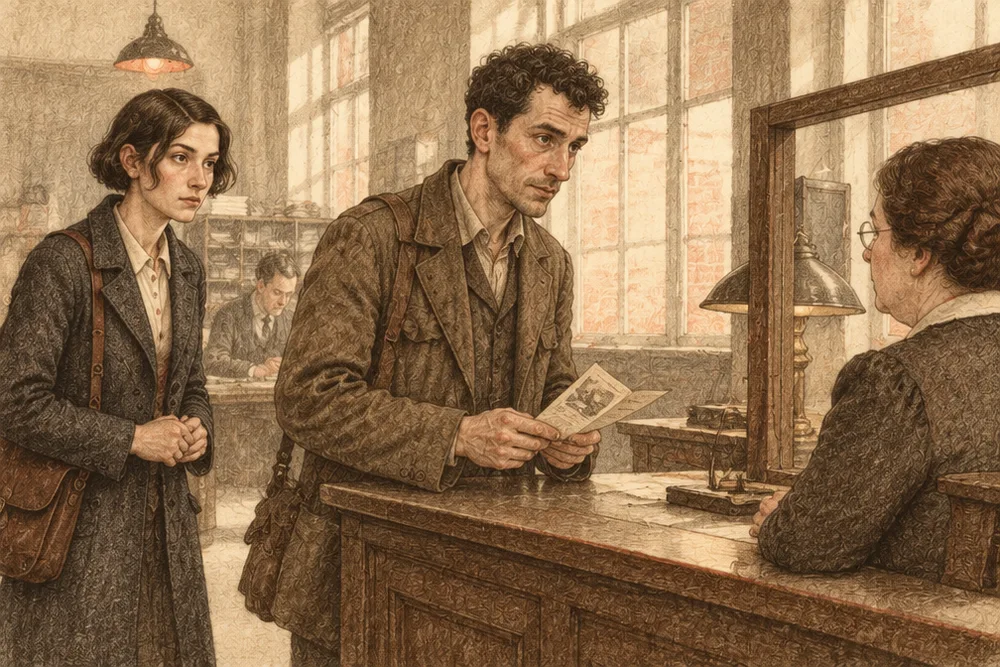
He turned the paper over, as though the answer might be printed on the back. “And if I can’t get to county town?”
“There’s a postal address.” She heard how cold it sounded as it left her mouth. “You should put your name and the dates you’ve lived there.”
The man folded the leaflet into quarters and tucked it in his cap. He did not ask for her name. “They’ll have me out before a letter gets there.”
The clerk called the next person forward. The man stepped aside, holding the cap in both hands. Marta could have said more, but she knew no more that was true. She went back to the notices.
At noon the office clock struck with a dry, metallic clang. Marta had not noticed how quickly the morning had passed until the counter queue thinned and she saw the man’s place empty. His leaflet had not been returned. It was a small thing, the kind of thing the office could not record, and that made it difficult to forget.
She went through the drawer again in case there were more forms beneath the blotter. There were only envelopes, a packet of pins, and a printed notice about the board’s next public meeting. She took a clean sheet from the typewriter tray and began a note to the claims office: A person attending at the counter today states that he has lodged for six years at— She stopped. She had no name, no exact number, and no authority to send a note that would become part of a file. Even if she sent it, a letter would travel more slowly than the demolition crews.