The Names Beneath the Hem
Page 92 of 249
Chapters
“Could Hester compare this with the slips?” Lettice asked.
“She can look. She can ask me what the marks mean. But she does not get to say I was bought into the society by your mother’s kindness.”
“I’ll tell her that.”
“No,” Nell said. “I will.” She gathered the tally sheets into a squared stack. “If we go to Hester, I speak for myself.”
Lettice felt the quick answer rise in her, the one that would have promised Nell everything before she knew what Hester could recognize. She stopped it. “Then we go when you’re ready,” she said. “And you decide what you want put before the members.”
Nell studied her. “That is not the same as saying the society will accept me.”
“No.”
“Nor that the mill will repay the full sum.”
“No.”
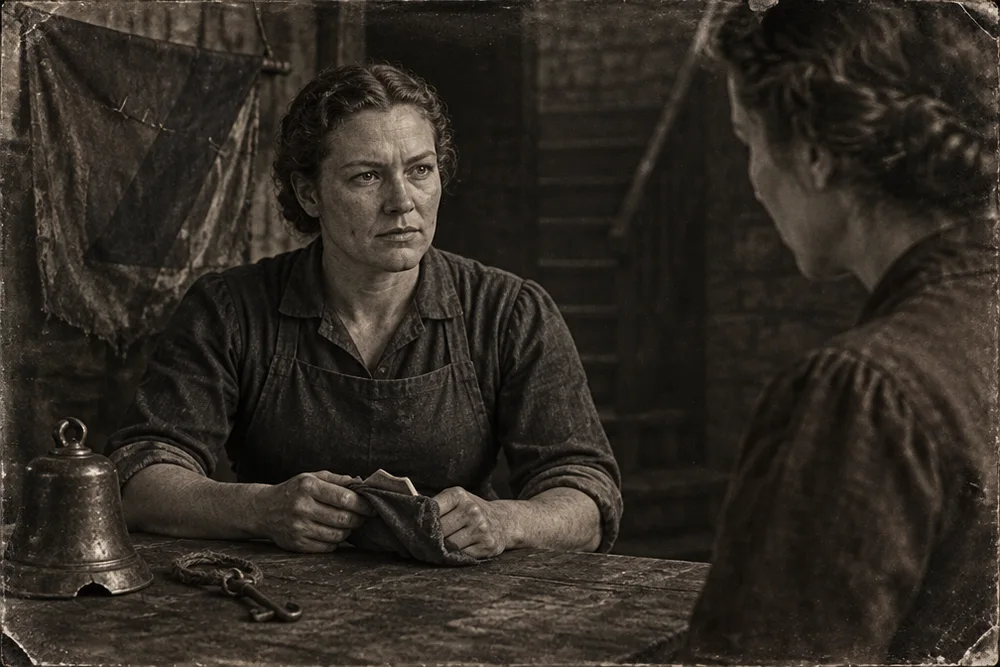
“Good. I have had enough of promises made in other people’s names.” Nell slid the tally back into its cloth wrapper. “Martha said the banner had a duplicate entry. I thought she meant a second account of her own dues.”
“I thought so too, when I first saw the names.” Lettice told her how the narrow slips had been folded into the hem, and how Hester had sealed them rather than let anyone carry them about. She did not describe the figures as Nell’s until Nell asked which quarter they covered. Then she read out the dates and totals she remembered, carefully separating what she had seen from what she guessed.
Nell listened with her head slightly turned. At one date she raised a hand.
“That quarter can’t be mine alone,” she said. “Martha was ill for part of it. I washed for two houses then, and I had enough to pay only the smaller portion. If the slip gives a full quarter, somebody advanced the rest.”
“The records can be checked.”
“They will be checked,” Nell corrected. “There is a difference.”
The distinction unsettled Lettice more than a denial would have. She had been carrying the evidence as if its discovery made her responsible for directing it. Nell’s correction gave the task back to its proper hands, and left Lettice with no smaller part to play: she had to keep from converting help into authority.
“What do you want the society to do?” Lettice asked.
“First, put the question to me, not about me. Then count what I paid and what I worked off, if the rules allow it. If the rules do not allow it, I want to know that in the room, with the rule in front of us.”