The Names Beneath the Hem
Chapter 15 · The Chair at the Table
Page 195 of 249
Chapters
By eight the Brass Measure had ceased to be a saleroom and become a room for people with figures to dispute. The auction platform stood empty. Pye’s red lot pencil lay beside a stack of ruled paper on the long table, and the buyers who had agreed to wait one day sat along the wall with their hats on their knees. No one had come to bid that morning. They had come to learn what their patience might cost them.
Lettice carried a chair from the inn’s passage and set it at the table, not beside Martha but among the claimants. Nell Rudge watched her do it. Then she came in from the cold, folded her indigo apron beneath her, and sat down squarely. Her bone tally clicked once against the chair rung. Martha remained standing, plum shawl close around her shoulders, horn spectacles hanging from their tape.
“There,” Nell said. “Now I’m not being brought in as somebody’s evidence.”
Hester Grimsill, seated at the head of the table, opened her tin rule box. “You are here as a claimant, if the members find the rule applies. No chair settles that.”
“I know,” Nell said. “That is why I took it.”
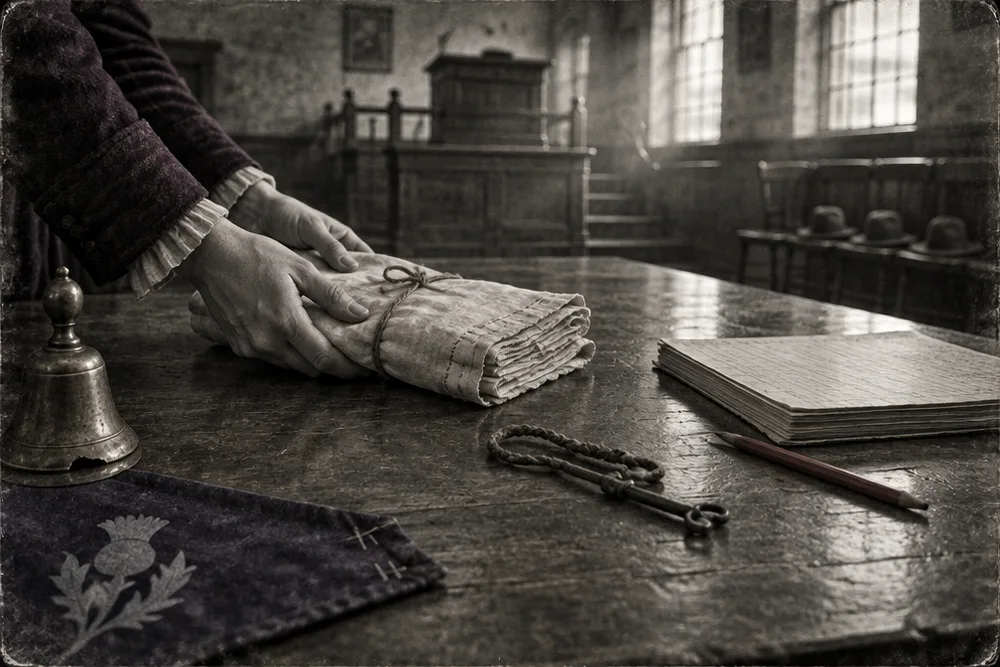
Lettice felt the old impulse to explain for her: that Nell had worked, that Martha had paid, that the mill had turned her away. She held her tongue. Nell had not asked her to speak. Instead Lettice placed the folded linen slips on the bare board, still inside Hester’s paper wrapper. The room smelled of damp wool, ink, and the coal fire downstairs. Outside, rain ticked at the tall windows, blurring the slope of Tenter Brow beyond the glass.
Hester did not open the wrapper at once. She called the roll of those present and marked each answer in a narrow hand. Sick members came first, then households from the row, then those who had subscribed toward the deposit. The distinction mattered: a man who had paid into the society but could not stand through a long meeting still had a claim on its money. When all were accounted for, Hester asked whether anyone objected to the slips being examined in their presence.
A woman near the door said, “We’ve seen them already.”
“You have seen the marks,” Hester replied. “Seeing a mark and agreeing what it means are different acts.” She laid the wrapper open and passed the slips one by one, never letting them leave the table. Each bore the society’s old stamp, the quarter’s number, and the figures Martha had stitched into the banner’s hidden hem. Beside certain payments appeared two names or a second surname, written in the compressed notation used by the former treasurer.