The Names Beneath the Hem
Chapter 12 · A Name on the Back
Page 154 of 249
Chapters
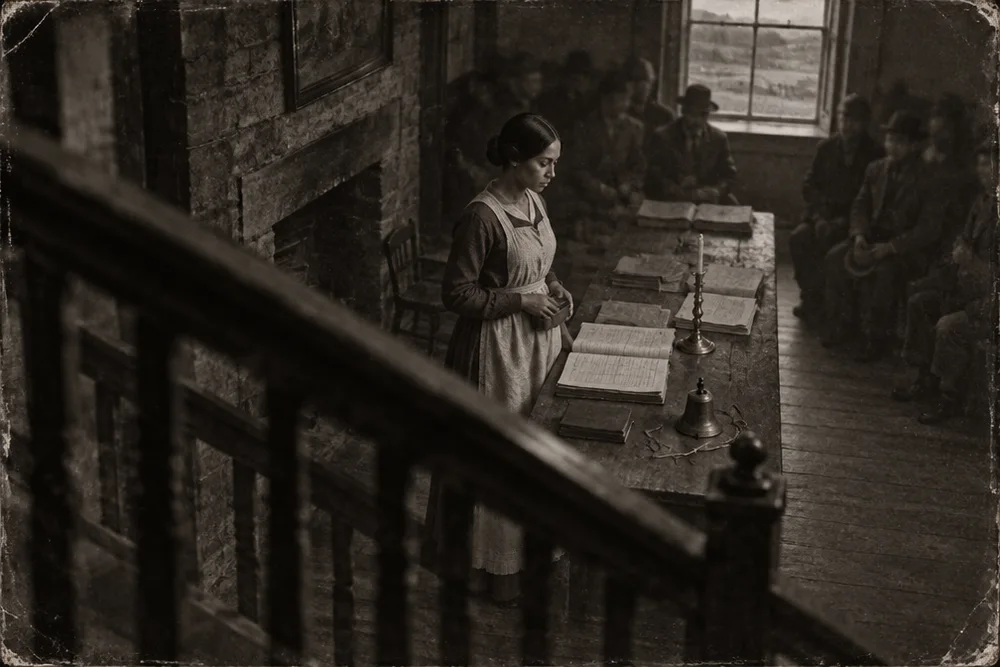
Pye had put the disputed debt in a narrow column headed Not Cash. The red pencil line beneath the words looked as decisive as a locked door. Jabez stood at the end of the Brass Measure’s long table, where the auction papers lay weighted by a brass candlestick, and read the line again. Beyond the window the clough was wet and colorless; across the room, men who had come to discuss the cottages waited with their hats on their knees.
“I cannot count an expectation as money,” Pye said. He spoke without impatience, which made the refusal harder to argue with. “If Venn pays it, it is money. If he promises to pay it, it is a promise. If your arithmetic is disputed, Mr. Jowett, it is arithmetic.”
“The figures agree with the deductions,” Jabez said. He kept his eyes on the page, not on Lettice, who sat opposite with her needle case in her lap. He had offered her a calculation, not his name. Yet she had brought the matter into a room where names were the only things anyone could spend without a signature.
Pye tapped the column once. “I am not deciding whether the mill owes the society. I am deciding whether the trustees can bid with it tomorrow. Those are different questions.”
From the side stair came the scrape of a chair. Hester Grimsill had been standing below, where voices from the platform carried but faces were hidden. Now she appeared at the landing, tin rule box beneath one arm. “He is right on the distinction,” she said. “It does not make the debt smaller.”
“Nor does it make it available,” said Tunstall. The coal merchant leaned across the table, his yellow yardstick tucked under his elbow. He had learned to be careful with the difference between a debt and a coin since the first inspection of Tenter Brow. “I cannot lend against a sum no one will certify.”
Jabez felt the old reflex to answer as a clerk: to make the column balance, to point out that two quarters’ deductions had been entered as remitted, though no matching receipts existed. His right cuff, dark with ink that never quite washed out, brushed the paper. “I can show how the sum was made,” he said.
“You can show how you made it,” Pye corrected. “If you mean to ask me to rely on it, you must say what part you saw and what part you did not.”