The Names Beneath the Hem
Chapter 4 · Eight Doors, Seven Pledges
Page 38 of 249
Chapters
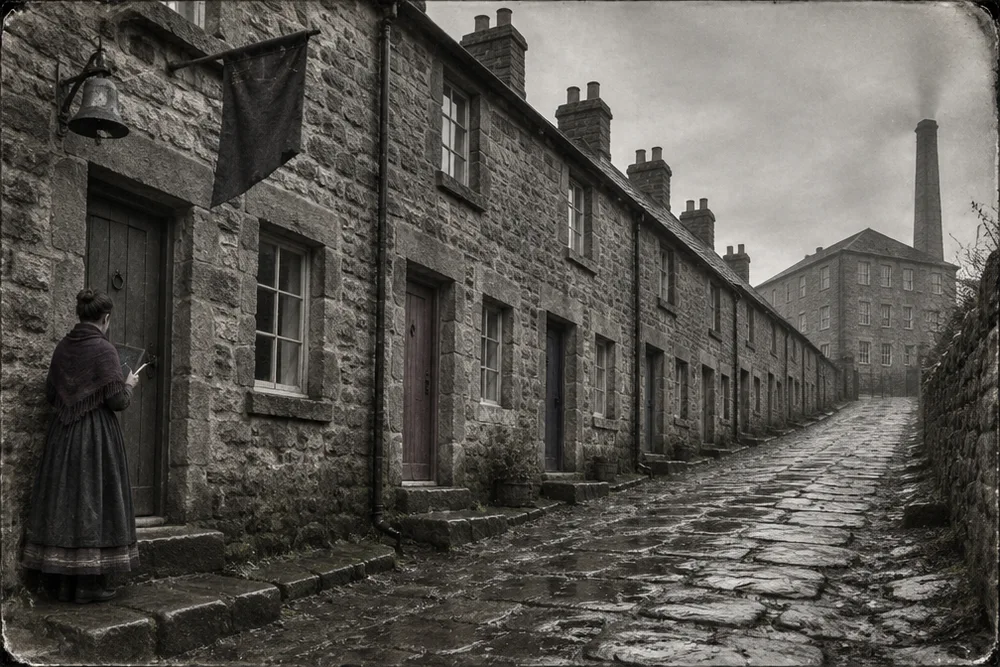
The row had to be bid on as one lot. Pye had made that plain at the sale, tapping the paper with his red pencil while the eight doors of Tenter Brow watched from the slope. No one could take the dry top house and leave the damp lower ones to chance. No one could buy a yard without the rooms behind it. The washhouse, he had added, belonged to the lane parcel and was not included at all.
Lettice carried a slate and a stub of chalk up the steep lane. She had been asked to find out what the cottages needed, not to promise what the society would pay. That distinction seemed small until she reached the first door and the woman inside asked whether the question meant they were to be put out.
“I’m making a list of repairs,” Lettice said. She kept one heel weighted, slate against her forearm. “Not taking names for a new rent.”
“Then write that down too,” the woman said, and held the door while Lettice entered.
The upper rooms smelled of damp wool and banked ash. A crack crossed the ceiling above the bed; the hearth drew badly, and rain had darkened the corner beside the window. Lettice wrote each thing, then asked which mattered most. The woman pointed to the roof. A pail could catch the drip, she said, but the child slept beneath it.
Lettice put roof first. She did not write that the house was sound simply because the door shut. Outside, eight chimneys made a broken line against the low sky. Far below, the mill stood quiet, its high windows reflecting no movement.
At the second house an old man showed her the yard wall, bowed outward where frost had worked between the stones. He had stacked two bricks against it to keep it from leaning farther. At the third, a young mother asked whether repairs would mean a higher rent, then answered herself: she could not pay more unless the mill gave her more than two short shifts.
Lettice wrote the wall and the broken latch, and beside them, in smaller letters, the question of rent. She had once believed a list was neutral if the marks were true. Now each mark seemed to turn into a demand on somebody: for money, for work, for patience while a roof was mended.
“Will the society choose who gets a house?” the young mother asked.
“We haven’t the money to choose anything yet,” Lettice said. “I’m trying to learn what we would be buying.”