The Names Beneath the Hem
Page 83 of 249
Chapters
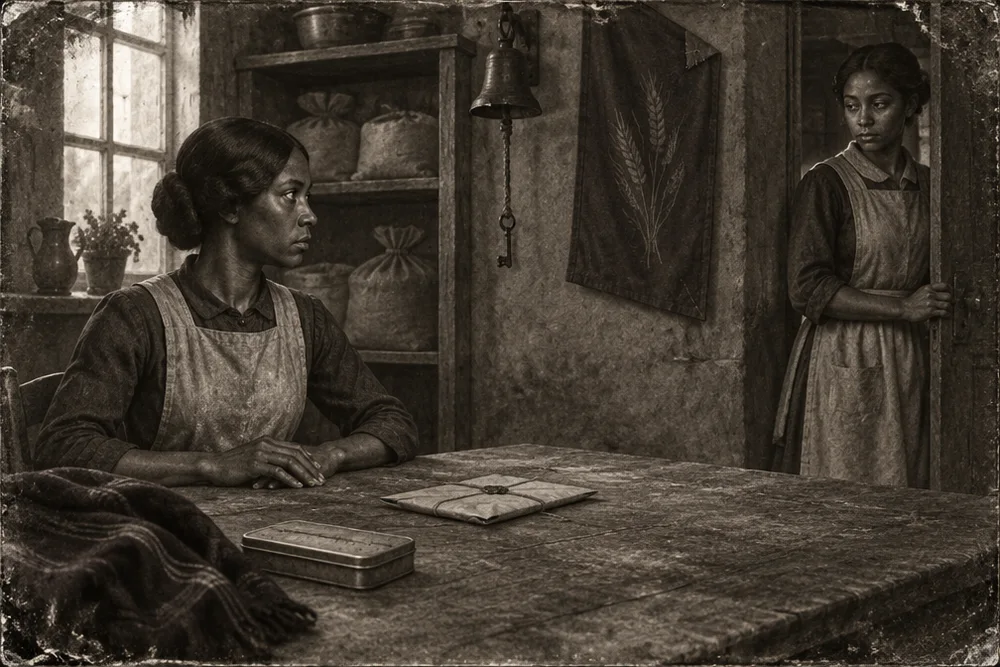
“You are deciding whether to enter a name without her.”
Hester glanced at Lettice. “That is why I am not opening the packet.”
Lettice looked at her mother. The older woman had not hidden the name from Hester out of simple distrust; nor had she made a clean public claim. She had preserved something, and the preservation had also concealed it. Now she would not let the people who found it use it before the person it belonged to could speak.
“Then we ask her first,” Lettice said.
“You ask,” Martha replied. “You found the slips. You can go.”
The room seemed smaller after that. From below came the muffled knock of a customer at the bread-shop door, followed by Hester’s sister answering that the shop was shut. Hester kept the packet in the center of the table. Lettice watched the little rectangle and understood that it was not a sum of money. It was a question that could injure someone if carried carelessly.
“You knew who it was,” she said to her mother.
“I knew who I had sponsored.”
“And you knew the mill would refuse her?”
“I knew the mill had already refused her.”
Hester’s eyes narrowed. “If she challenged a wage deduction, that does not make her ineligible for the society.”
“It did not make her ineligible. It made her unwelcome at the mill.”
Martha reached for her spectacles and put them on. The lenses magnified the dark, tiredness-shadowed eyes behind them. “I have spent years being asked whether I can account for money. I can account for it. I cannot tell you what she will say. Nor will I tell you in her place.”
Lettice heard the correction beneath the words. Martha had once taken a risk on Nell, and now Lettice was tempted to turn that risk into evidence for the whole village. She could already picture the saleroom: buyers watching, members listening, Jabez’s calculation open on the table. If she carried a name there without its owner’s consent, she would repeat the very act she had promised not to commit—speaking for a household because she thought the cause demanded it.
“Does she know you paid the second dues?” Lettice asked.
“She knew I was keeping her in the society. She knew what she owed me. She did not know I had hidden a record in the banner.”
“She worked for part of it,” Martha added. “She paid as she could.”
Hester sat very still. “Then she is not merely the beneficiary of your generosity. She has a contribution of her own.”