The Names Beneath the Hem
Page 50 of 249
Chapters
Lettice laid the chalk down. “Tunstall says the row costs less to him if he cannot control the washhouse or lane. But if we buy the cottages, we’ll still need both.”
“Then the price of access belongs in the account.” Martha’s voice was dry with fatigue. “Not hidden in the rent after the deed.”
“We don’t know who can pay more rent.”
“You have asked them?”
“Some. They fear the question means they’ll be put out.”
Martha looked directly at her. “Then say what you are asking, and do not ask in the name of the society until the society has decided. I was treasurer long enough to know how a number becomes a decision when no one remembers who wrote it.”
Lettice thought of the seven names on the pledge sheet. “I’ll take the terms to the meeting.”
“And Nell?”
“She won’t pledge. She says she won’t offer money before she knows what right it buys.”
“That is sense.”
“She also wants laundry workers counted.”
“That is sense too.” Martha adjusted the spectacles on their tape. “A household is not only the person whose wage comes through the mill hatch.”
Lettice had heard this in other words from Nell. It seemed to gather force now that her mother said it. “I want to make a plan that includes everyone.”
“Wanting is not the same as asking.” Martha’s chin stayed raised, but her voice had softened. “You are learning which one comes first.”
Outside, a door banged shut in the wind. Lettice gathered the slate and pledge sheet. She had entered the day thinking that keeping the row intact was the whole task. By evening she understood that a row could remain eight houses and still fail the people in it: through a locked washhouse, a rent raised to cover repairs, a lane reserved for carts, or a promise made in someone else’s name.
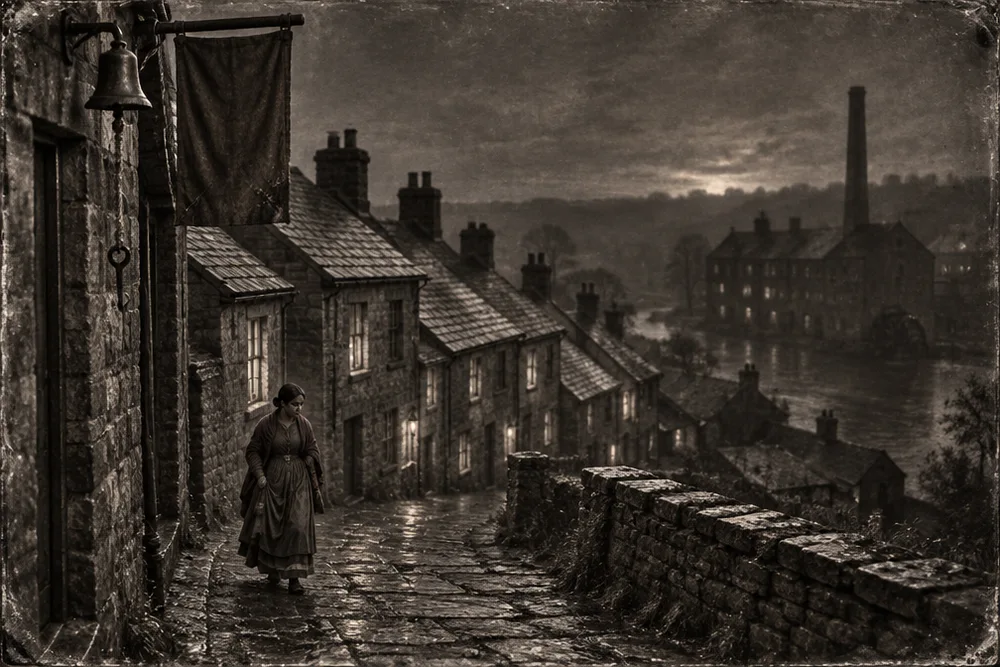
She stepped back into the narrow clough. One cottage window showed a candle; another showed only the dim shine of glass. The washhouse chimney had gone cold, and sheets hung motionless inside. The society had not chosen a price, a lender, or a boundary it could afford. It had only begun to see what those choices would cost.
Lettice held the slate close against the damp air. Tomorrow she would ask who could afford a higher rent. Not as a test of loyalty, and not as an excuse to exclude anyone, but because a number left unasked would still be collected—only later, and from whoever had the least power to refuse.