The Names Beneath the Hem
Page 45 of 249
Chapters
“I want to know what the rent would have to cover before I tell anyone it is fair.”
“There’s no fair price for a damp wall.”
“There is a cost to repair it.”
Lettice felt heat rise under her collar. She could have said more; she could have named the hours she had spent copying accounts, the money she did not have, the way her mother’s notice lay folded in a drawer. Instead, she let the argument rest where it stood. Hester had told her to ask before she spoke for a household. That included the society, she was beginning to see.
An older member with a cough asked whether the washhouse could be leased. Another wanted to know if the lane parcel was owned by Venn or by someone else. No one knew. A woman who had not pledged said she could pay a small sum for use of the washhouse but could not advance money toward the cottages.
“Put that down,” Lettice said, then stopped herself. “May I put that down without your name?”
“Yes. Put the amount only when I’ve decided what I can pay.”
Lettice made a mark beside the washhouse line, not a number. It was the first entry on the slate that described a possible arrangement instead of a defect.
The meeting broke without a vote. The seven pledges remained seven, neither accepted nor refused. Hester said the society would need to see the lot particulars and the lane parcel’s terms before it could decide what to recommend. The weaver left dissatisfied, carrying the notion that delay was a kind of defeat. Lettice could not prove him wrong.
On her way down, she stopped at the bottom cottage. The tenant was mending a torn sleeve by the doorway. Lettice told her the society had not promised to bid.
“That’s better than promising and changing it later,” the woman said. She pulled the thread tight with her teeth. “But it doesn’t tell me where we’ll be in a month.”
“No,” Lettice said. “It doesn’t.”
“Your mother’s in the top row. She’ll know how it feels.”
Lettice did not answer for Martha. The notice to quit had been folded and hidden, but not forgotten. She thought of asking whether the woman wanted her name entered on the repair list, then saw the needle pass through the sleeve again and understood that the question could wait until the work was done.
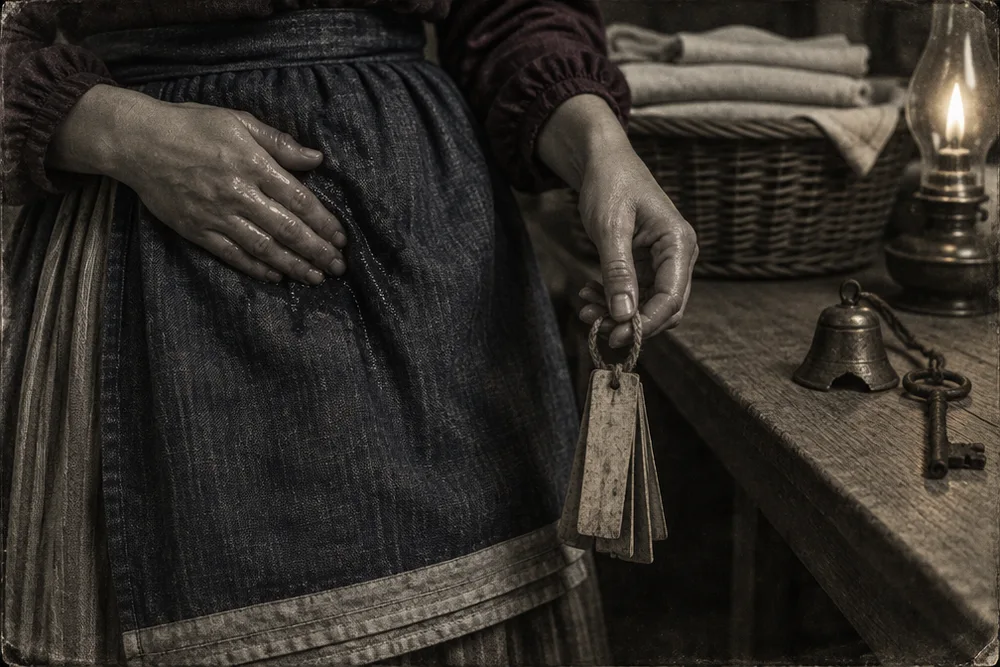
At the washhouse, Nell was speaking with two laundry women beside a basket of folded sheets. One had been among those who might pay for use but could not offer a pledge. Nell’s hands were wet; she wiped them on her apron before taking her tally from its cord.