The Names Beneath the Hem
Page 146 of 249
Chapters
Lettice stood beside the table, her hands held still so that she would not fidget. “The bid may fail,” she said. “If it does, advances must be repaid as we have agreed, whether or not the row is bought. We will write that before taking them.” The first lender looked at her. “Then write it.” Hester had already begun a separate paper. They set out what would happen if the auction failed, if the debt arrived late, or if the trustees could not complete the purchase. Each clause made the offer slower and less certain, but more real.
When the meeting ended, they had more pledged than before, but not enough for the deposit and reserve together. Hester closed the book and kept the papers in the tin box. “We are not ready,” she said. “No,” Lettice replied. Outside, the lane fell dark early under the clough. She carried no money home, only the figures and the knowledge of how much remained missing.
The following day, Tunstall met Lettice at the edge of the row. He had a new sheet from his solicitor and a smaller figure penciled beside the loan total. “I have reduced the intended bid again,” he said. “The repairs are more than I judged, and the deposit is not secured.” Lettice looked at the penciled amount. “If you bid less, the sale may not reach reserve.” “That is possible.” “Then why come?” “Because I am still willing to lend, if your trustees can raise what I have required. I will not pay the seller’s price and then pay again for the roofs without security.”
It was the first time he had spoken of lending as distinct from buying. Lettice did not thank him. “The trustees have not accepted the draft. The members are considering the advances.” “I know.” “And the bid remains the trustees’ decision.” “I know that, too.” He tapped the paper with one finger. “I will make the terms available. I will not improve them by pretending the row costs less than it does.”
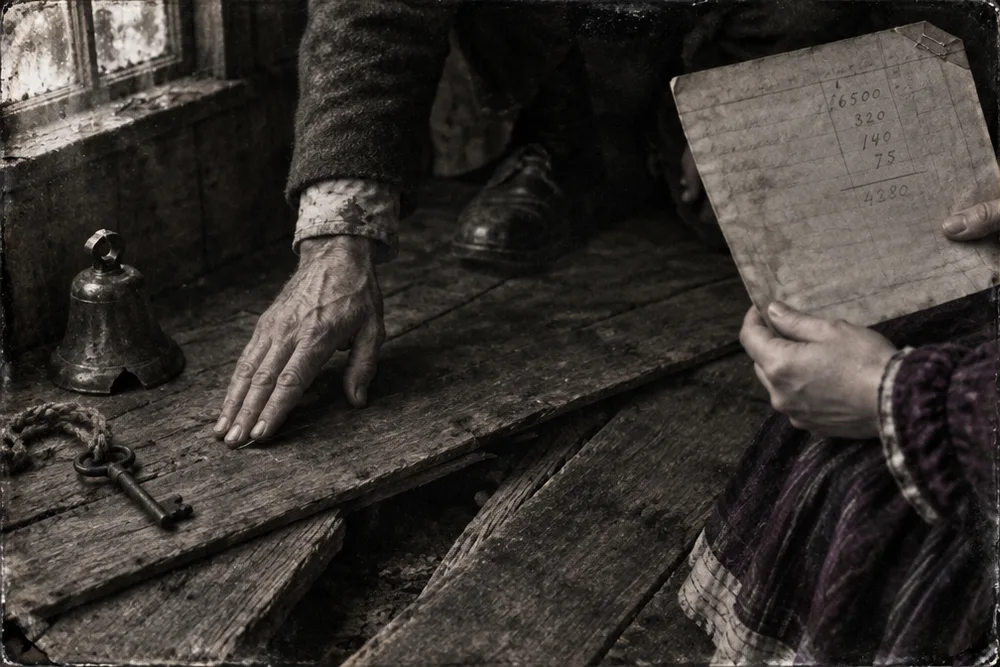
She walked with him to the lower house. The boards had been lifted for inspection and laid against the wall. The tenant had spread a cloth over the exposed patch so no one would step into it. Tunstall crouched to look beneath the floor. “This is worse than I thought,” he said. “The joists need checking.” “Will that change the reserve?” “It may.” “Then the estimate must change.” He stood. “You are determined to have every bad fact written down.” “It is cheaper than having it discovered after the signature.”