The Names Beneath the Hem
Page 143 of 249
Chapters
The discussion ended without a pledge roll. Lettice carried the revised draft back down the stairs. The offer had become more accountable, but the deposit remained short and the repair reserve was not yet priced. She had asked the households to risk money; they had answered by asking what they would be bound to. That was not refusal. It was the beginning of consent, and it took longer.
Lettice returned to the lower cottages with a measuring cord, a slate, and a list of repairs to be priced. Tunstall had agreed to inspect the row with her, but she would not let him write the list alone. The first house needed boards beneath the damp corner and a new piece of flashing at the roof. The second needed a latch. The third had a chimney that smoked into the room when the wind came down the clough. At each door, she asked permission before entering and asked the tenant to point out what mattered most.
“If you write the roof first, the hearth will be forgotten,” said the woman in the third house. Lettice added both, with a mark beside the chimney so the roofer could inspect it. Tunstall read the note. “A chimney can be costly.” “So is a room no one can use.” “I know.” He did not strike it out.
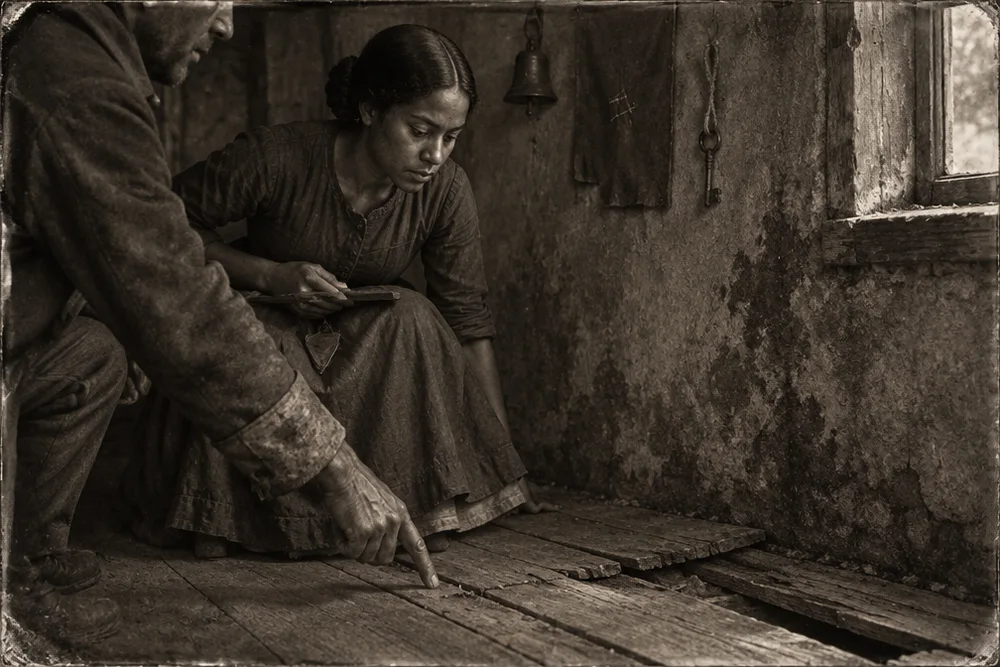
At the bottom cottage, the tenant showed them the board that had flexed under Tunstall’s boot. There were more rotten boards beneath the bed. Lettice measured the length; Tunstall wrote down the quantity and the likely price of timber. They agreed that lime and labor would be priced separately. The tenant stood by the doorway as they worked. “Do I get told what you decide?” she asked. “Yes,” Lettice said. “And the trustees will have to show the repair account.” “Not only to the lender?” “To the tenants, too.” The woman glanced at Tunstall. He nodded, though his expression remained guarded.
The inspection took the rest of the morning. By the time they reached the washhouse lane, the paper held a column of repairs and another of costs still to be obtained. Tunstall examined the roof from the path but did not go inside. “That is outside the lot,” he said. “It cannot be in my reserve.” “It will need its own money,” Lettice answered. “The laundry users are considering a lease.” He turned his head toward the building. “You have a plan for every separate piece.” “A plan is not the same as funds.”