The Names Beneath the Hem
Page 11 of 249
Chapters
“They will examine a bid,” Lettice said. “No promise to spend.”
“That is more honest than a promise.”
“Hester says I should speak to Jabez Jowett about the accounts.”
Martha’s needle paused. “He signed something.”
“What?”
“I don’t know. I know only that people said his name when the society asked where the dues went.”
Lettice waited, but Martha returned to her stitching. She had not forbidden the question, nor offered the answer.
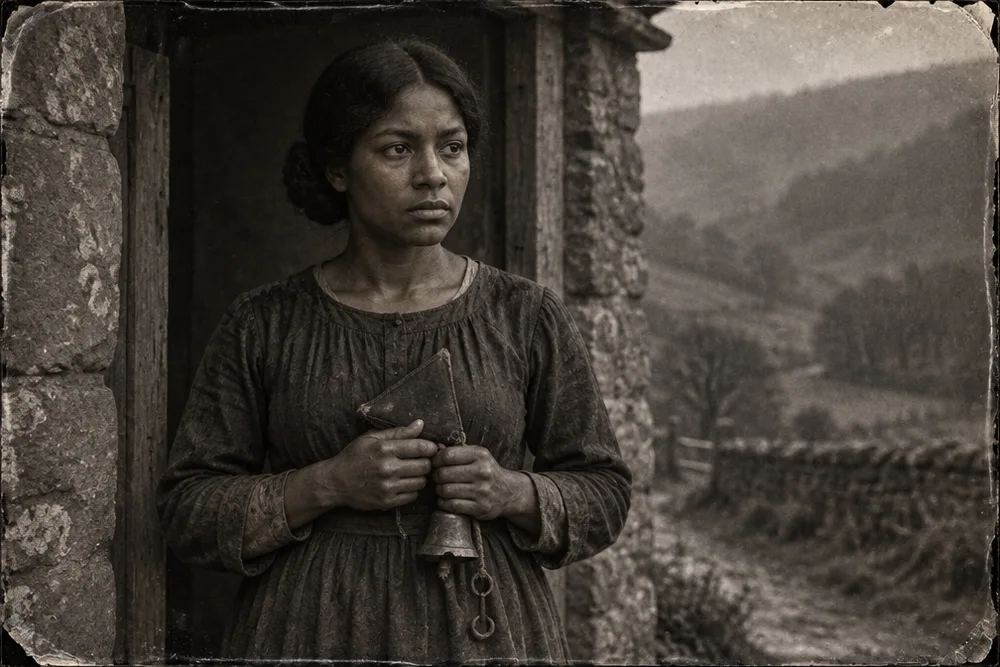
The bell rested by the door. Its chipped lip faced the room, a small bright crescent in the dark brass. Lettice could lift it, carry it, and hand it over for a penny. She could not make it call the people who would pay for Tenter Brow.
“I’ll go to him tomorrow,” she said.
Martha drew the thread through the cloth. “Ask him what he knows. Don’t ask him to be what you need.”
Lettice stood at the threshold of the kitchen, listening to the faint damp wind move along the eaves. The cottage walls held the chill. In the lower houses the walls were worse, and the yards broader; in the upper houses the rooms stayed drier. Eight doors, eight accounts of what a home needed.
“I won’t,” she said.
Martha tied off the thread and examined the seam. “You may want to.”
“I may.” Lettice picked up the bell. “But wanting a thing won’t make it true.”
Martha’s expression softened only a little. “That is one way to learn.”
The society had agreed to look, not to buy. The auction had failed, not ended. The notice remained valid, and the owner could sell the row when the bidding reached his reserve. Lettice had no money of her own beyond the coins from mending and the odd weaving shift. What she could afford was the bell, one penny, while the price of a home lay beyond her reach.
She set the bell down carefully and took her needle case from the shelf. The triangular case was worn at the corners. She would mend what work came, and in the morning she would go to Jabez Jowett with dates and questions she did not yet know how to ask.
“If the society bids,” she said, “it must be for all eight houses.”
“Then it must count all eight households,” Martha replied.
Lettice looked at her mother. “Yes.”
That answer was not a plan, but it was a measure. The next day she would ask the society’s former clerk what had become of its money. By evening, she might know what they could not spend. She would go anyway.