The Morning We Closed Up
Page 50 of 236
Chapters
“That’s a good plan.”
He looked up, surprised by the uncomplicated agreement. She felt the same surprise in herself. It was not forgiveness. It was simply the satisfaction of finding a workable next step.
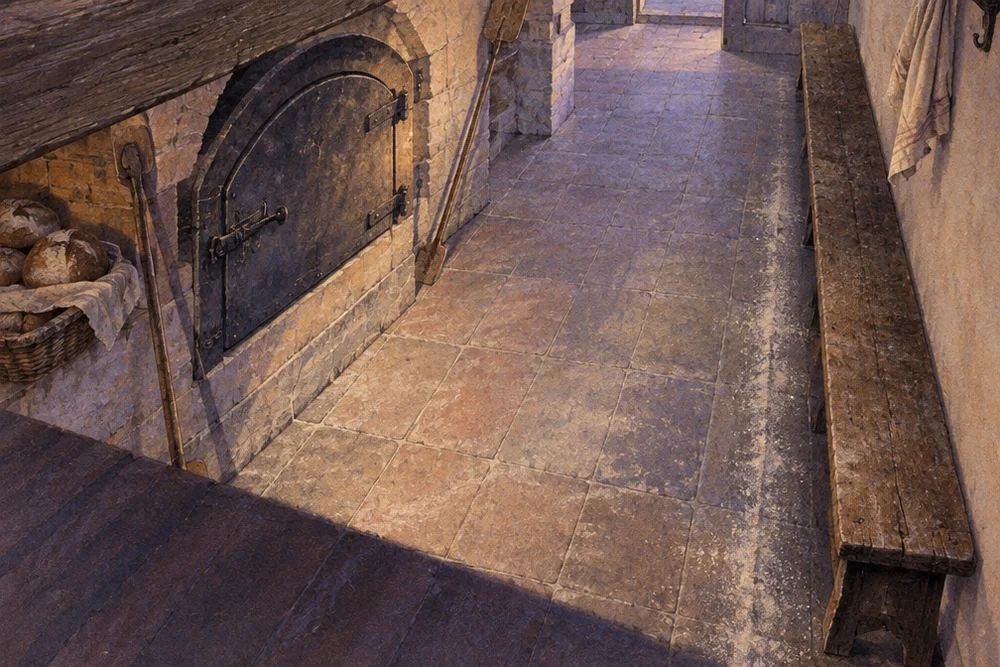
They set the skates under the bench and pushed. The old wood groaned as it moved. Dust lifted from beneath it in a soft plume, stippling the light. When the bench reached the center of the room, it blocked the rear oven door. When they shifted it toward the west wall, it narrowed the aisle to a shoulder’s width. The route had no sympathy for nostalgia.
Nell tested each turn with the rack. At the west wall, she got through but could not get back without reversing. The casters bumped against the bench leg, and the rack trembled. Yvette held the frame until it steadied.
“I can’t do that while carrying a pan,” Nell said. “Or if somebody’s coming the other way.”
“If we shorten the bench?” Rafael asked. He crouched to inspect the legs. “Cut it into two tables, leave the best section intact. Add locking wheels.”
“Would it be safe?” Yvette asked.
“If I reinforce the ends. I’d have to price the lumber and the casters.”
“And the cutting.”
“I can do the cutting.” He glanced at Yvette. “That doesn’t mean it’s free. I’ll add my hours to the estimate.”
The careful accounting unsettled her more than his old habit of offering to do things. She had been expecting the labor to become another invisible gift, something she would have to notice and repay later. Instead he was naming it as a cost before she had to ask.
“We can put that in the budget,” she said.
They slid the bench farther along the wall until its end cleared the turn, even though the other end blocked the oven door. Nell pushed the rack through the turn again. This time she didn’t have to lift a wheel. “That works.”
“For one rack,” Yvette said. “The schedule can’t put two people in the same lane.”
“Then the booking rules need to prevent that.” Nell tapped the plan. “That’s not a reason to keep a bench that makes the lane narrower.”
Rafael took a pencil and crossed out the old bench outline. It was a small stroke, just graphite through graphite. Yvette watched him do it, then watched him fold the drawing so the box marked for her station disappeared inside.
He didn’t look at her for approval. The gesture was enough for now.
Rafael’s pencil hovered over the folded plan. He opened it again, carefully smoothing the crease with his palm. “I want to say something about the papers,” he said. “Before you have to catch your train.”