The Morning We Closed Up
Chapter 17 · Steam on the Glass
Page 167 of 236
Chapters
By Saturday morning, the booking board had no white left on it. Every square for the weekend was written over in blue marker: Nell’s dumplings, Ivo’s cart buns, a wedding order from the woman who rented the cold table on Thursdays. Yvette had put her own name in the final hot-production slot, then circled it twice, as if the ink could keep the hours from being taken away. The kitchen smelled of yeast and wet wool. Outside, rain stippled the west shutters and ran in silver threads down the alley glass.
She stood at the stainless table with a hotel pastry apron tied over her rust chore coat, sorting trays by destination. The labels were in her block hand: NELL—SATURDAY, IVO—NIGHT, ARDEN—CAFÉ. A cracked plastic tub held the last of the candied peel she’d brought from the hotel kitchen. She had a delivery to make before noon, then a second bake for the café account, the first in what the buyer had called a promising series. It was the kind of sentence that made her afraid to breathe too hard.
Rafael was under the exhaust hood, one long wrist disappearing into the housing. His olive work shirt was dark at the shoulders from rain. He had already checked the breaker and the switch, then checked them again because the fan had failed at the exact moment the room was full of plans. He straightened, stooping automatically when he looked at her. “It’s dead,” he said. “Not a belt. The motor’s gone.”
“You can fix it?” she asked. She heard the edge in her voice and didn’t sand it down.
“Not today.” He wiped his fingers on a rag. “Not safely, anyway.”
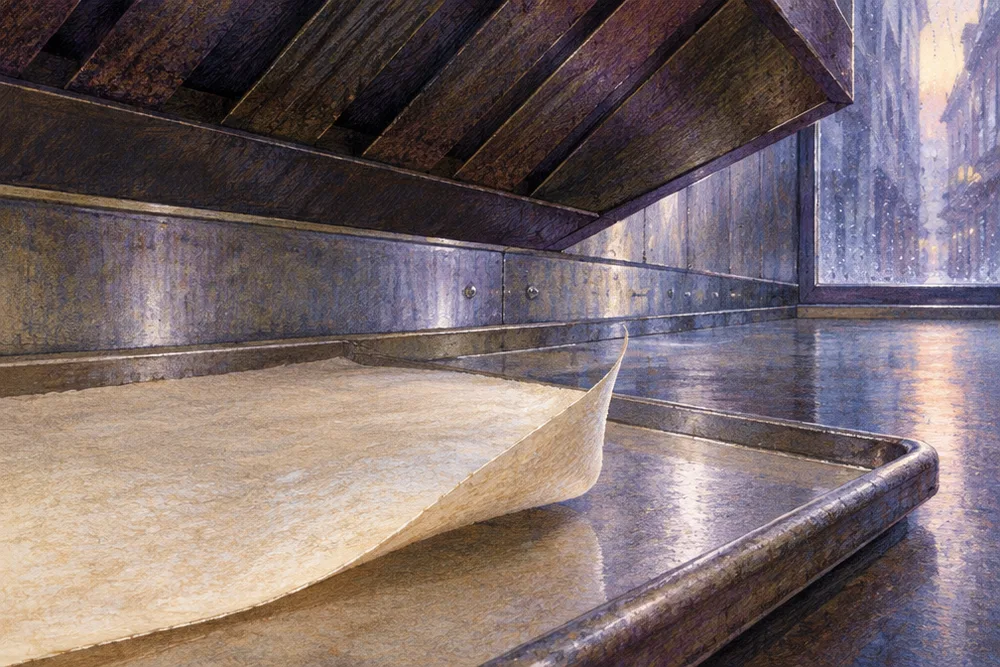
A cold draft breathed down from the hood. It lifted the corner of a parchment sheet and carried the sour-metal smell of rain from the alley. Yvette looked at the clock. Their busiest weekend had been the proof they needed: people could use the place, the schedules could overlap, the old bakery could pay for itself. Now every hot booking depended on an exhaust fan that had chosen this morning to stop.
“Can we run the ovens with the doors cracked?” she asked.
Rafael’s expression tightened, not with annoyance but with the familiar effort of not pretending a problem was smaller than it was. “No. Not with the gas range going. The inspector was clear about ventilation. We’d be putting everyone in here at risk, and I won’t ask them to work in that.”