The Morning We Closed Up
Chapter 5 · A Bench for Nobody
Page 44 of 236
Chapters
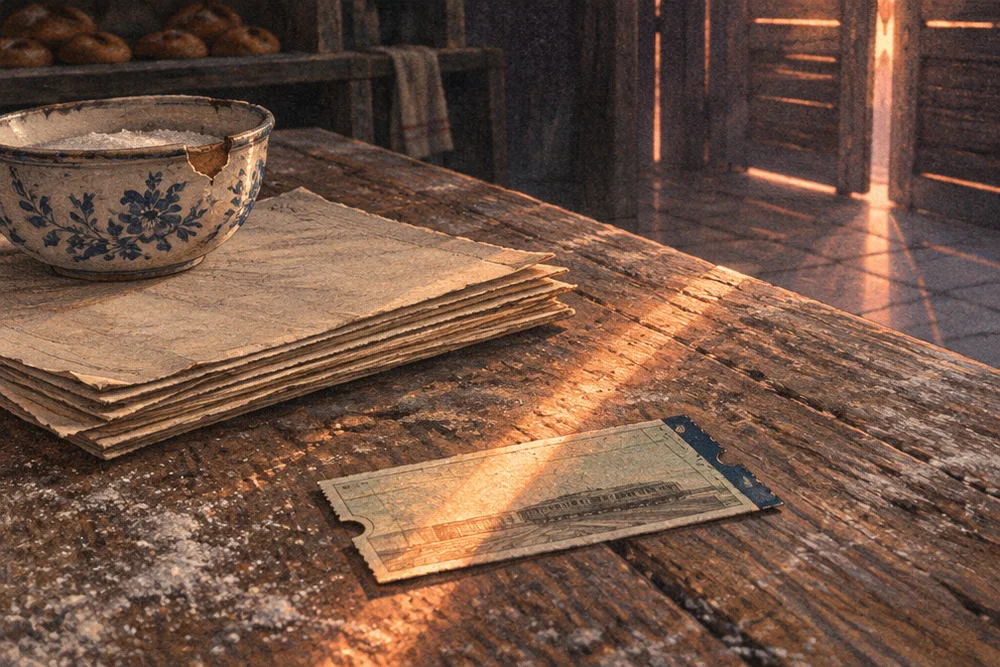
The sale papers waited on the bench beneath a chipped sugar bowl, as if Rafael had set a place for them. The bakery’s old workbench ran the length of the room, its scarred top still dusted with a pale film that the years had not quite persuaded into corners. Beyond it, morning light leaked around the west shutters in thin, coppery bars. Yvette laid her train ticket beside the papers and took out her phone.
She opened the spreadsheet she had built on the overnight ride. The first column was the money she would receive for her half: enough to clear the last of her pastry-school debt, replace the mixer she had been renting by the hour, and fund three months of ingredients for the wholesale orders she had been cultivating in the city. The second column was what staying would cost: repairs, insurance, utilities, and the hours she would have to travel back and forth until the kitchen could carry itself.
She had made the figures plain on purpose. No dream column. No line marked what it would mean to bake beside Rafael again, because she did not know how to price that without turning it into leverage. She had learned what happened when affection became an invisible subsidy. It made every favor look like a promise and every promise like a bill arriving late.
A metal clink came from the rear oven. Rafael had gone to the delivery alley to fetch a crate of fittings, leaving the room to her and the papers. His plans lay unrolled across the far end of the bench, weighted at the corners with a screwdriver and a jar of dried yeast. She moved the sugar bowl aside and studied the drawing: wash sinks, storage, a marked aisle, equipment stations available by the hour. And, in a neat box beside the window, her name.
YVETTE — PASTRY / RESERVED SLOT.
She had seen the box before. It still irritated her with the same small, exact sting. The slot was generous. The drawing even showed a chilled cabinet beside it, the sort she had once complained nobody could afford. Rafael had imagined her needs carefully. He had simply skipped the part where she got to say what they were.
She turned back to her spreadsheet and added a fourth column: what she could bear to lose. The figures did not change. But the room, with its flour cellar and its narrow delivery alley and the key still hanging on the nail in the side-door recess, refused to behave like a number.