The Morning We Closed Up
Chapter 3 · What Won’t Fit Through
Page 24 of 236
Chapters
The next morning, a different inspector arrived carrying a clipboard in one hand and a folding rule in the other. Yvette had expected a uniform, or at least a badge; instead, the woman wore a rain-darkened coat and looked first at the narrow aisle between the bench and the old proofing cabinet.
“Preliminary only,” Rafael said. He stood beside the rear oven, shoulders inclined toward the inspector as if he could make the room easier to hear. “We’re not asking you to sign off today.”
“Good,” said the inspector. “Because I can’t see the floor.”
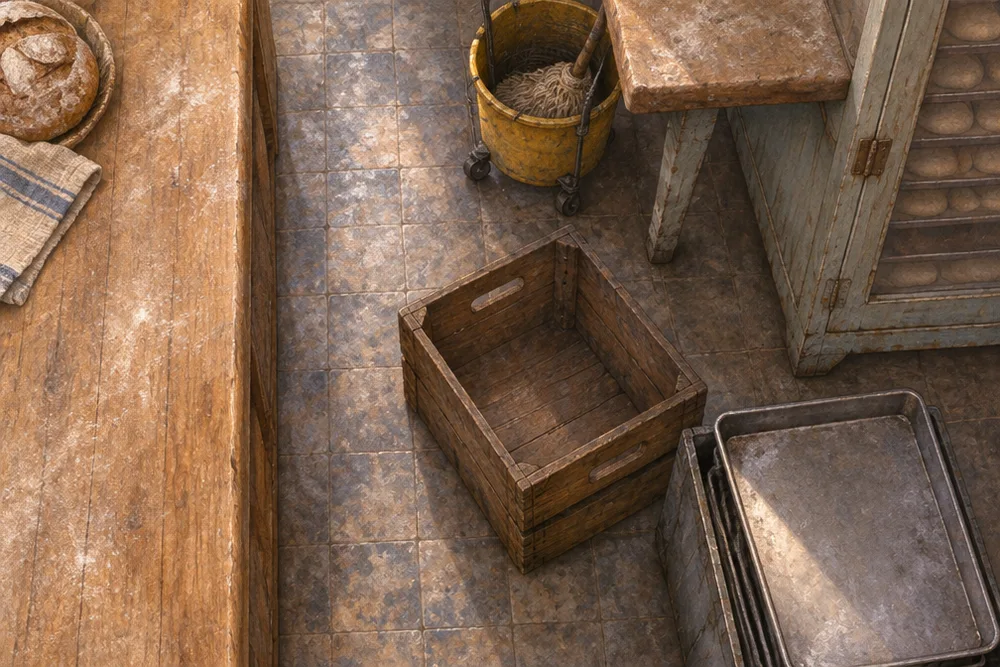
Yvette followed her gaze. A crate of sheet pans had been pushed into the aisle, then a bucket of cleaning supplies, then the end of a worktable Rafael had moved in from the cellar. Their little shop had always been full, but full had once meant warm bread, flour sacks, and the small, manageable disorder of a working day. Now every object seemed to have been left there to demonstrate why the place could not work.
“We’ll clear it,” Yvette said.
Rafael nodded. “We can get the pans into the cellar.”
“Not until we’ve checked the cellar access,” the inspector replied. “I need a continuous route from the delivery door to the work area. No storage in the marked aisle. And I need to see the floor and the wall junction behind that bench.”
The bench ran almost the length of the room, a thick-planked divide between the front counter and the kitchen. Yvette had first learned to roll dough there, elbows braced, while Rafael measured flour into the old blue bowl. Four years ago, when they closed, she had left a key on the nail inside the recessed side door and told herself she would come back for it. The nail had stayed. So, somehow, had the bench.
“We’ll move it,” Rafael said.
The inspector made a note. “If it moves.”
Rafael set down the pan crate and tested the bench with both hands. It did not shift. He pressed his shoulder against the end, then straightened, rubbing flourless palms together.
“It’s heavier than it looks,” he said.
“It was heavy when we built it,” Yvette replied. “You insisted on the extra boards.”
“I wanted it to last.”
“It has.” The words came out sharper than she meant. The inspector’s pencil moved over the page, and Yvette wished she could take the edge back without taking back the truth.