The Bell That Cost a Ferry Landing
Page 45 of 284
Chapters
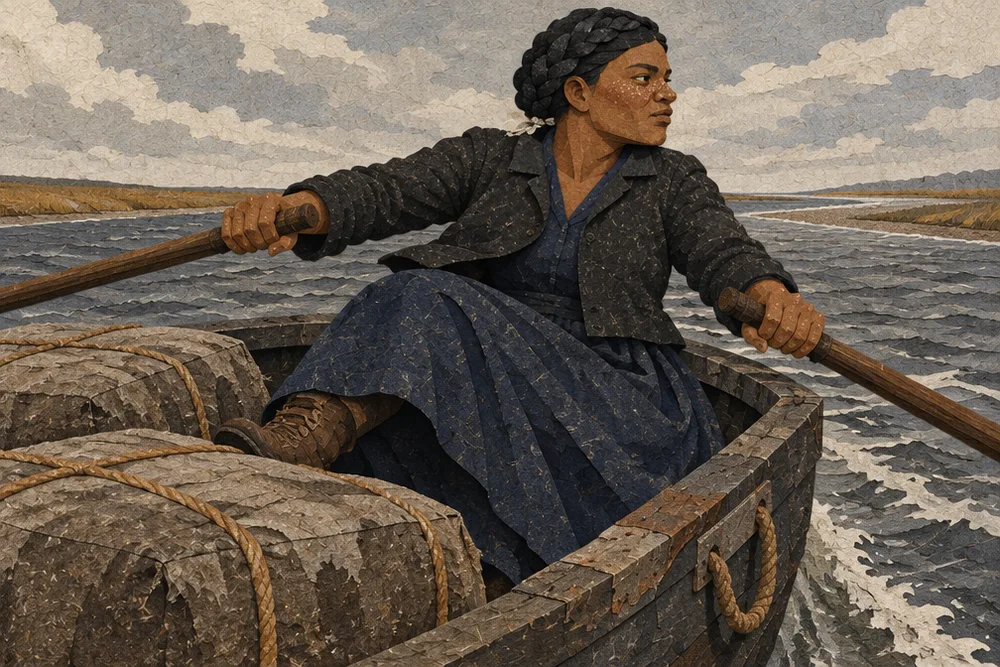
A gust came off the open water and lifted the edge of her cropped tarred jacket. She pulled the skiff’s nose into it, keeping the sailcloth bales from shifting. The yard’s gravel mouth drew closer, but so did the bend’s outward pull. She had to row past the easiest approach, then turn with the current and come in at an angle. The manoeuvre was simple in an empty boat. Under load, the stern wanted to swing.
A punt emerged from the yard, its two men pushing off toward the farther bank. They gave her room, but their wake slapped the skiff’s side. One bale lurched against the other. Rosamund caught it with her boot and adjusted her grip on the oars. She heard one of the men call something that the wind tore apart.
The crossing to Blythe’s yard was not long in miles. It was long in the way a road became long when it ran uphill, or a day became long when every task took both hands. Rosamund had to row past her own landing, lose the current’s assistance at the bend, and bring the boat back upstream into the gravel mouth. She reached the yard’s outer stones with her shoulders burning and her palms hot beneath the calluses.
Blythe watched from the bank. A yard boy caught the bow and held it while Rosamund climbed out. She lifted one bale, then the other. Neither had torn; neither had taken water. That much was a success. She was too tired to feel triumphant.
‘One shilling,’ Blythe said, and held out her hand.
Rosamund laid the coin in it. She did not ask whether the charge included the boy’s help. It had not been agreed, and Blythe might have added another. The boy had caught the boat because it was coming in, not because he had been hired. Rosamund would not turn an unspoken favor into a debt.
‘That was a loaded crossing,’ Blythe said. ‘You can tell the commissioners your boat will make it.’
‘I can tell them that I can bring a skiff to your gravel.’
Blythe’s pointed chin lifted a fraction. ‘You are particular about your words.’
‘My mother used to say a ferry was made of them.’ Rosamund gathered her oars. ‘You promise what you can carry.’
The coin disappeared into Blythe’s apron pocket. Behind her, the yard’s boats were drawn up on rollers above the tide. They had solid ground under them and a bank of gravel against the river. Rosamund’s landing had neither. It had cost her savings to make, and now, even before the commissioners chose a leaseholder, she had paid to use a rival’s ground.