The Bell That Cost a Ferry Landing
Page 20 of 284
Chapters
He had a handful of seed in his palm. The grains were swollen, their husks split in places, and a dark smell came from the ground at his boots. “This was meant for the winter sowing,” he said. “It has sat in wet sacks for three days. The land cannot wait upon every disputed stone.”
“The landing soundings are inconsistent,” Peregrine said. “There may be a passage beneath the bank.”
“There is no passage on the plan.”
“The plan may be wrong.”
Varneck’s eyes went to him. “A plan can be wrong without the ground becoming right.” He let the seed slip through his fingers. “You have my sympathy for the cottages. I will not have the farms left under water because a ferryman’s daughter remembers a bell.”
“Nor would I advise that.”
“Then close the gap.”
“I am not certain there is a gap. I am certain the evidence does not yet justify calling the ground solid.”
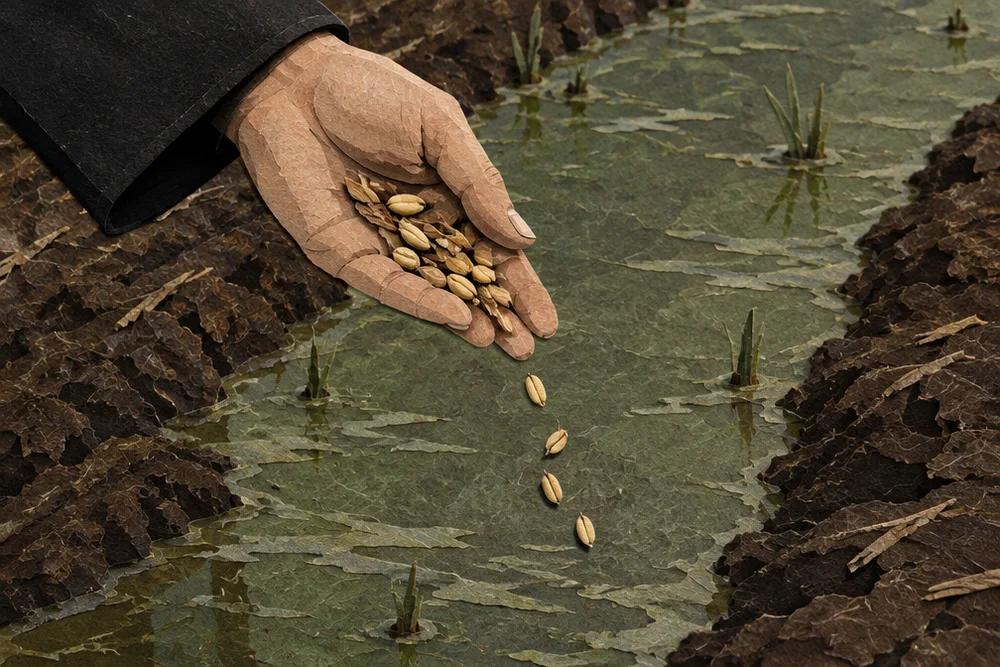
Varneck wiped his palm on a handkerchief. “A surveyor who cannot distinguish a void from a channel will spend the whole season drawing questions.”
Peregrine had no answer that would improve the soil beneath them. He had seen how the seed had drowned, and the cost of every week’s delay lay in that handful. Yet the cottages below the ferry road were occupied, and their ditch was not merely a line on a plan. His task was to balance those facts without pretending one erased the other.
They walked the edge of the field, Varneck stiff-backed and Peregrine matching his pace. The ground dipped into shallow pools between ridges. Each pool carried a skin of green, and the water in the furrows had no visible outlet. Beyond the farm, the new embankment rose in a pale, unfinished curve toward Fenwick Reach.
“The farmers have paid their levy,” Varneck said. “They expect protection. We cannot put a gate on every trickle that claims to be historic.”
“I have not proposed a permanent gate.”
“You have proposed nothing yet.”
Peregrine stopped beside a split drainage pipe and looked along the bank. He imagined the workers filling the suspected passage with clay, then tamping it tight beneath the new embankment. The test would be quick, and its evidence plain only if the cottage water rose. If it did not, the commission could proceed. If it did, the plug could be withdrawn before the bank was finished. The cottages would be inconvenienced, but not condemned to a permanent flood; the farmers would lose a few days, not a season.