The Bell That Cost a Ferry Landing
Page 168 of 284
Chapters
A gust came down the reach, fluttering the canvas shelter. The iron bar clanged against the cart’s rim. The sound rang out cleanly, a sharp metal knock, and Rosamund felt the sudden foolishness of all her waiting. She turned her head toward it. No bell answered.
She walked to the edge of the landing and looked down at the dark water pressed against its side. She could see the top of the lowest pile, blackened by tar, and below it only a wavering reflection. The channel’s surface was smooth in the shelter of the bank. A bubble escaped from beneath the step, made a small silver eye, and was gone.
Across the reach, Kit raised one arm. His boat had swung parallel to the bank. He pointed at the waterline, then turned his palm upward. Nothing. Rosamund gave him the same signal: wait.
The tide had not yet turned. She could feel that in the pull against the mooring, could see it in the weed that still dragged downstream. She had wanted the note to prove her right. Now she understood that wanting could not place it in the right hour. If she called the commissioners too early, they would hear only wind, water, and a woman insisting that a buried bell had spoken to her.
She went up the bank to Peregrine’s table and fetched a length of chalked cord from the tool basket. The cord had been used to mark the landing’s straight edge; one end was black with tar. She tied it around the stake that marked the water’s height and laid the other end toward the ditch, not as a measurement but as a reminder of the line between the two places. Then she looked at the cottages again.
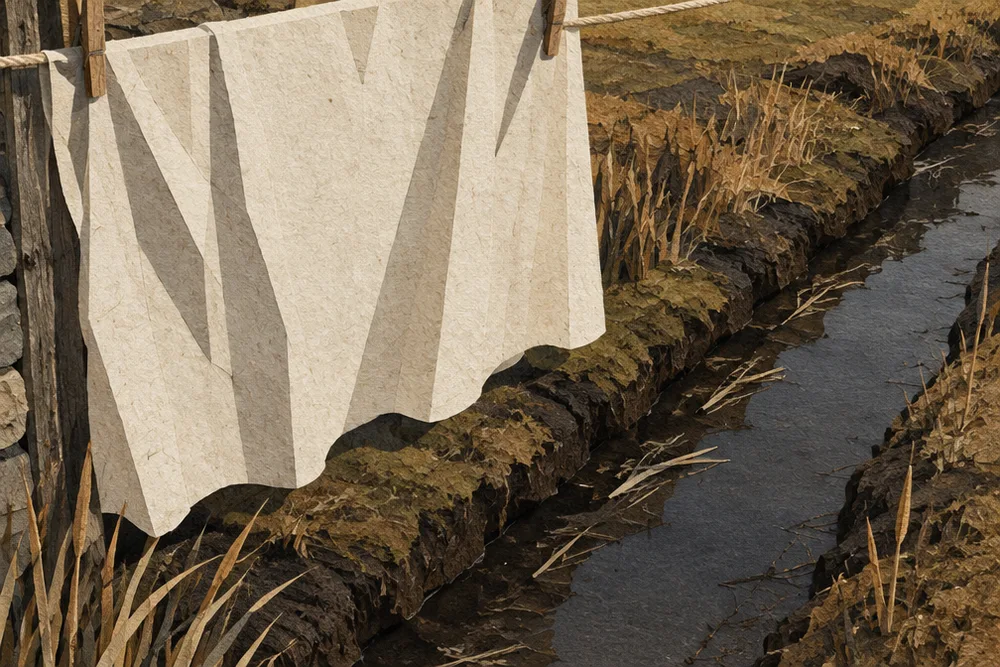
The ditch seemed still. Nell had gone inside. The sheet on the line fluttered once, then hung limp. Rosamund crouched beside the nearest channel and pressed a reed into the mud. It bent toward the river, but the current was so slight she could not be sure. She dipped her fingers in. The water felt colder than the river surface, which had been warmed by the day’s thin sun.
A man could stand at the wrong place and see no movement. A man could stand at the right place and see a motion that was only a reed turning. Peregrine’s work required him to distinguish those things, and he did. Rosamund disliked how much she needed that distinction from him.