The Bell That Cost a Ferry Landing
Page 159 of 284
Chapters
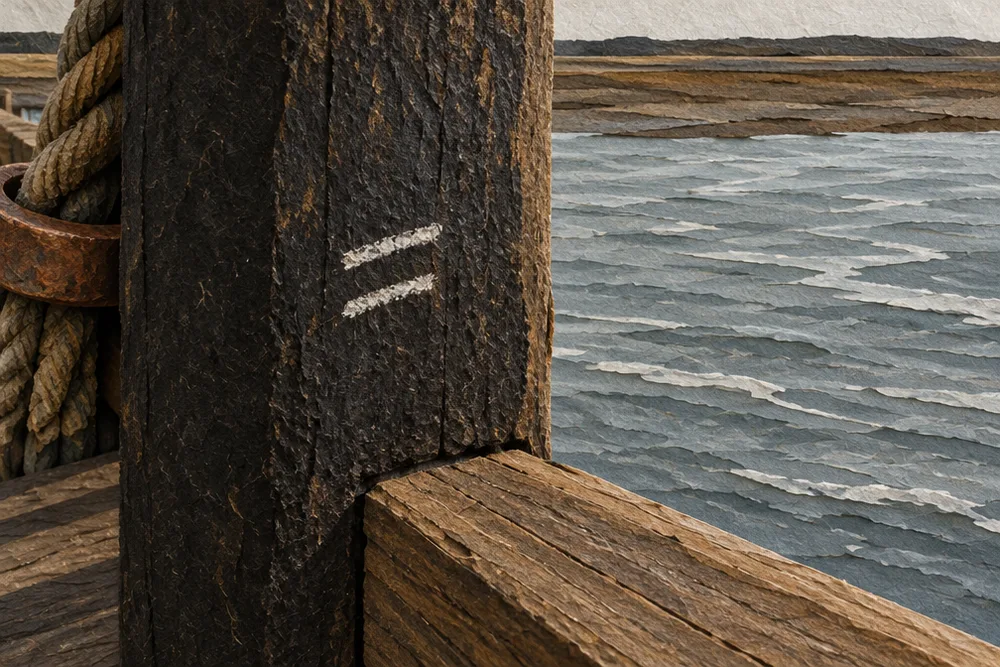
At the water’s edge the next morning, Rosamund found a narrow strip of chalk on one of her landing posts. Nell had marked the level of the previous night’s ditch water, not as a warning to Rosamund but as a record for the tenants. Two small strokes showed where the water had stopped falling. The marks looked crude against the tarred grain, yet she understood their use. They could tell a person whether the ditch had drained, whether it had risen, whether anyone had taken care to observe it.
She touched the post with one finger, careful not to smear the chalk. The new landing had been built to prove itself through use: a boat coming alongside, people stepping ashore, cargo passing over the boards. But a landing could also hide what lay beneath it. The culvert’s stone mouth was somewhere under her work, and the water’s movement below the planks had already cost the tenants a washhouse floor and her a portion of her savings.
A gull dropped onto the bank and pecked at a scrap of rope. Rosamund shooed it away, then bent to examine the outer board that had shifted beneath her heel. The peg had worked loose. She had a hammer in the boat, but no fresh peg. From Blythe’s yard she could buy one, or cut it from a spare strip. She would have to keep the landing serviceable with less timber than she had planned.
The task was plain enough. She fetched the hammer and drove the board’s edge back into its seat. The blow sent a hollow shiver through the platform. Rosamund stopped, listening. Nothing answered—not the buried bell, not the ditch, not the distant river. Only the blunt echo of her hammer fading against the embankment.
She tried the board again with her heel. It held. She wrote a note for herself on the back of a fare tally: check every outer peg at the ebb. Then she tucked the paper into her jacket.
The money from the sale was already spoken for. The tenants would buy what they judged necessary, in quantities they could afford, and Rosamund would be only one possible means of bringing it across. This did not make her less responsible for the landing. It made the terms clearer. A ferry was no favor bestowed by its owner; it was a passage people could choose to use, and a crossing that failed them would not be repaired by good intentions.
She set the hammer beneath the thwart and looked once more at Nell’s chalk marks. The river had begun to draw away from the bank. The two strokes remained pale against the post, a small record of a shared account.