The Bell That Cost a Ferry Landing
Page 146 of 284
Chapters
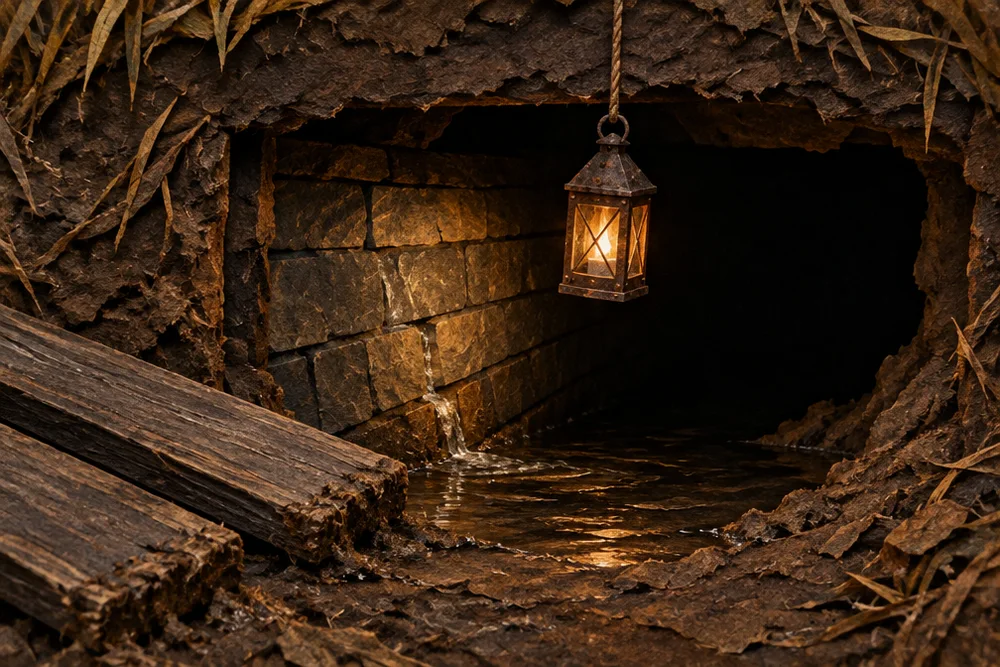
The laborers freed the first board, then the second. They pulled each one clear with the winch and laid it on the bank. The timber was dark, furred with silt along its lower edge, and worn smooth where the current had rubbed it. Behind the boards, the opening narrowed into blackness. Peregrine leaned close enough to see water moving through it but not enough to reach the stone roof.
He lowered a lantern on a cord. The flame bent in the damp air. It lit a few feet of curved masonry and no more. The arch disappeared beneath a shelf of mud. A pale streak on the stones might have been mineral deposit or a line left by many years of water. He could see no bell, no flap, no intact ironwork. His plan had placed the proposed plug beside the landing, but the landing had not yet been dismantled. The hidden mouth remained hidden.
“There’s a passage,” the clerk said, peering over his shoulder.
“There is an opening under the bank,” Peregrine corrected. “We do not know its full course or whether it is the original culvert.”
The clerk lowered his eyes to the book and amended his note.
The ditch fell another half inch while they watched. Then the water level steadied. On the far side of the cottages, a narrow rill drew away from the low ground and ran toward the exposed opening. The change was plain enough to see, though the route beneath the earth was still out of sight. Peregrine pointed it out to Varneck. The chair watched the water slide between two tufts of grass.
“The trial has shown the plug can hold back water,” Varneck said. “It has also shown an opening. We will need a further examination before deciding whether to alter the work.”
“Yes,” Peregrine said. “The report should state that the ditch fell after the plug was withdrawn, while the river was ebbing. It should not name a route we have not traced.”
Varneck’s small hands closed around the head of his walking stick. “We shall state that the cottages flooded during the trial and that the water fell when the stop was relieved. No one disputes the sequence. The question is what work is justified.”
Peregrine looked again into the dark. A line of water slid down the stone and vanished under the mud. It was evidence of movement, not yet a map. He understood why a landowner wanted a decisive answer, and why a tenant wanted one too. The same caution that protected his professional name could prolong the danger. Still, he could not put certainty where there was only a wet black opening.