The Bell That Cost a Ferry Landing
Page 138 of 284
Chapters
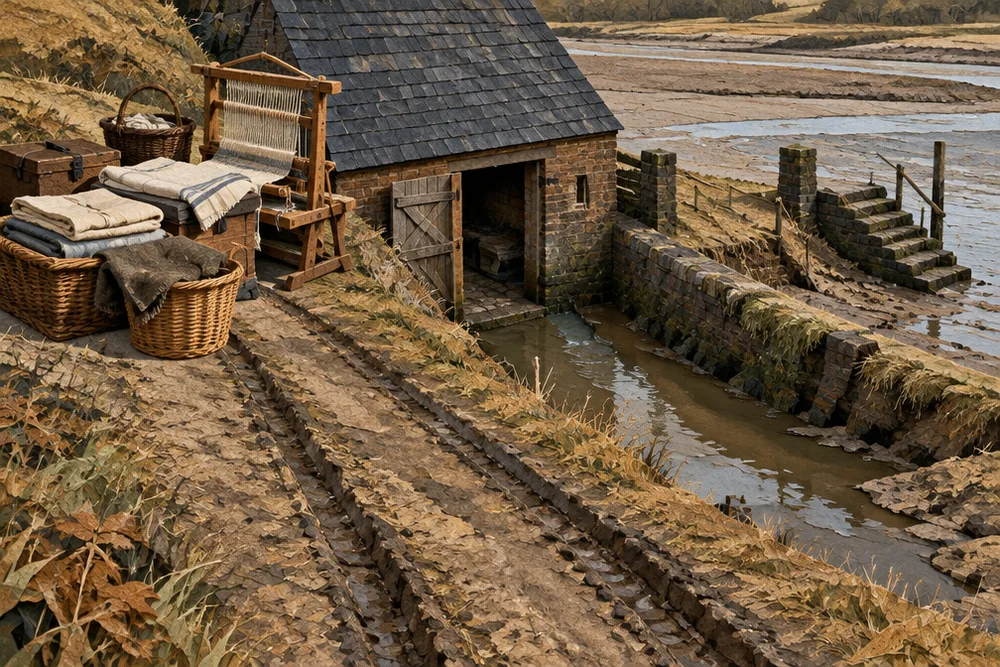
Outside, the ditch had climbed to the bottom of the hedge. The line of water was above the stones that had marked it in the morning. It moved slowly now, almost imperceptibly, but each time Rosamund looked again it covered a little more grass. In the reach, the ebb had taken the river away from the bank and left the old landing stairs exposed to the air. Between those two movements, the cottages were being drowned by water that ought to have been leaving them.
The foreman came down from the embankment with a lantern. “Mr. Cleeve’s sent word. He’ll come at first light. The plug stays until then.”
“It must be opened now.”
“He says not without checking the bank face. If we pull it and the earth gives, the whole slope could slip.”
Rosamund knew he was not inventing the risk. The embankment was new, the earth still loose, and the culvert’s exact course uncertain. Breaking the plug in the dark might give the water a sudden route through weak ground. But leaving it meant a slow rise into every cottage that sat low enough to take the pressure.
“Has he heard the bell?” she asked.
“I gave him the message.”
“And?”
The foreman raised the lantern, lighting the mud on his boots. “He said a sound is not a measurement.”
Rosamund looked across at the cottages, their doors propped open and their household goods crowded along the road. “No,” she said. “But wet feet are.”
The foreman went back up the slope. Rosamund stayed by the ditch with Nell and Kit, watching the water darken the lower bricks of the washhouse. There was no rain, no broken pipe, no stream crossing the road. The wet ground under her boots and the slow pressure against the cottage walls were the only signs of the hidden passage.
Nell came to stand beside her, the rust shawl drawn tight. “You needn’t stay all night. We can put the goods in the inn shed.”
“I’m staying.”
“You have a boat to mind.”
“The boat is empty.”
“And the landing you spent your savings on.”
Rosamund glanced back toward it. The new planks made a dark shape against the water, their ends pinned into the bank. Each board had cost her time, money, and the labor of men she still owed. The culvert passed beneath them, if the direction of the old bell and the line of the ditch were true. Pulling up those planks might give the water a way out. It might also ruin the landing before the commissioners ever decided whether to lease it to her.