The Bell That Cost a Ferry Landing
Page 131 of 284
Chapters
She studied him a moment, then nodded—not in agreement, but as if his uncertainty was at least a thing that could be measured. “I’m going to find the other end.”
“You should not go under the landing in this tide.”
“I did not say I was going tonight.”
He almost apologized. Instead he said, “If you find the mouth, do not disturb the masonry. The stone may be bearing weight.”
“I know what a bearing stone is.”
“I did not mean—”
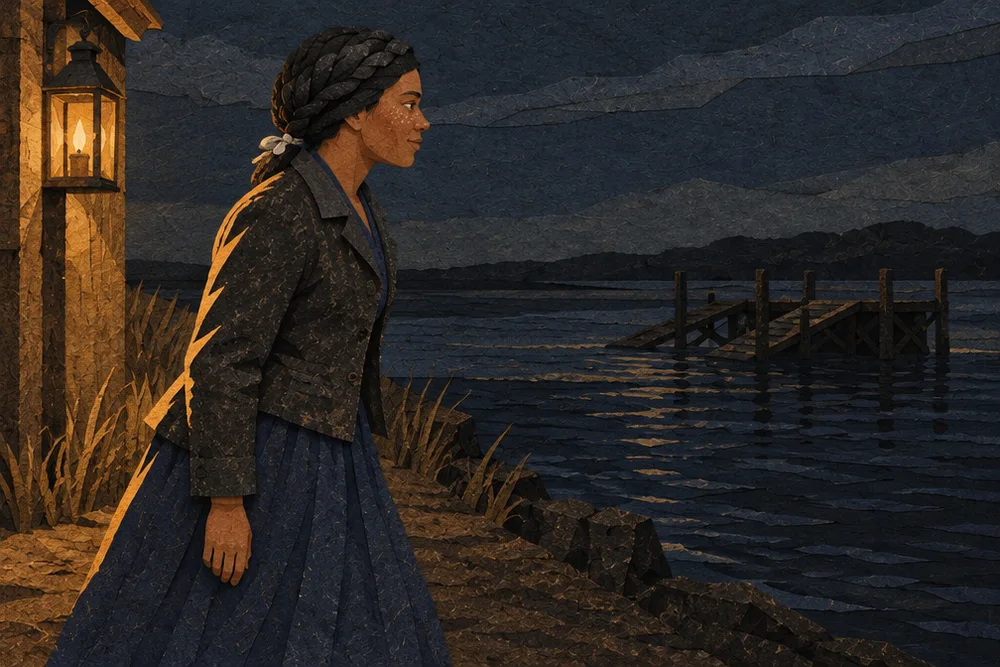
“I know what you meant.” She turned toward the river. Her new landing was a low shape against the darkening water, a structure of planks and sunk posts built with money she could not easily replace. “Your drawing says the ground is solid.”
“It does.”
“And you no longer believe it.”
He could have said that the drawing represented what he had known at the time. He could have explained that surveys were not prophecies. “I no longer trust that part of it.”
“That’s a beginning.” Rosamund walked away along the bank, not toward the road but toward the landing. Her tarred jacket caught the lantern glow, then vanished into shadow.
Peregrine returned to the clerk, who had folded the report and tied it with a narrow ribbon. The sheet looked smooth and decisive. Across the exposed margin lay a damp brown smear from his sleeve. He could not remove it without tearing the paper. He let it remain.
Before leaving, he asked the laborers to record the ditch level each hour and to wake the cottage tenants if it rose above the chalk. They agreed. The clerk wrote down their names. Varneck had already gone; he would pay for the watch and no more, not yet. The instruction was practical and limited, but it placed eyes at the cottages as well as at the bank.
Peregrine climbed to the road. From there he could see both the low houses and the new landing beyond them, with the tide dark between. He had begun the afternoon expecting to certify a closure. He ended it with an unverified outlet, a report that might be used against the people it described, and a promise to ask for more. In the notebook’s margin he wrote: Observers required at both ends before any permanent work.
Then he shut the book and carried it into the dark.