The Bell That Cost a Ferry Landing
Page 109 of 284
Chapters
Blythe stood by the post, arms folded. “He can earn the whole wage if he does that again.”
Rosamund looked at Kit, not Blythe. “Again.”
The third approach took longer. Kit let the tide carry the boat downstream until its bow lay even with the post, then eased the stern across with measured strokes. The gravel brushed the keel. He waited for the sound to deepen, then moved, keeping the hull level with the landing until the bow came alongside.
Rosamund put a hand against the post. “There.”
Kit lifted his oars. The boat held. He let out a breath that seemed to empty his whole chest.
Blythe stepped down to the water’s edge. She did not praise him, but she dropped a coin into his palm. “For the trial. Come to my yard at first light tomorrow. I have another cart and a pair of sacks.”
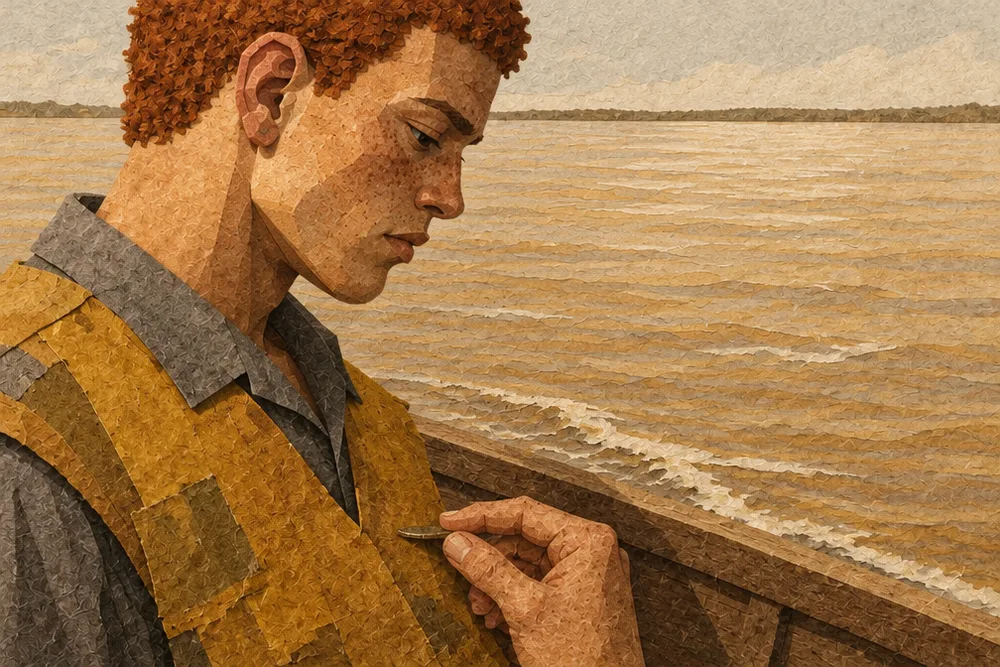
Kit looked at the coin. It was a shilling, worn smooth along one edge. He turned it over once, thumb passing over the queen’s profile. Rosamund saw what it meant to him before he looked up: a wage made in his own name, and work promised for another day.
“I’ll be here,” he said.
“If Rosamund can spare you,” Blythe replied.
The boy looked to Rosamund. The river moved between them and the far shore, gray and restless. She could tell him he was needed. She could tell him his place was beside her boat. Either might be true; neither would make her landing sound, or bring in the traffic she lacked. She remembered the split linen, the wet cottages, the empty ledger lines where a regular customer ought to be. She also remembered every time Kit had come running at her call, long legs taking the muddy steps two at a time.
“You’ll be here,” she said. “You’ll take the work, and you’ll listen to Blythe. Don’t pretend you know more than you do.”
“I don’t.”
“Good. That’s the first useful thing you’ve said.”
Blythe gave an amused snort. “He’ll fit in, then.”
The carter began stacking the remaining sacks. Rosamund helped him lash the load while Kit carried the first two across, this time with no one calling each stroke. He made the approach, waited for the gravel, and touched the landing cleanly. On the return he brought the empty boat to the bank without striking the post.
The coin disappeared into his pocket. Rosamund watched him check the rope and lay the oars ready for the next crossing. It was a small movement, familiar from a dozen mornings on her own boat, but now he made it as Blythe’s hired hand.