Night School for the Coal Bills
Page 70 of 261
Chapters
Afterward, Tilda tucked the envelope inside her apron pocket. Zella asked whether she would enter the figure in the brown ledger.
“Not yet. That book is for the accounts we’re comparing. This is Nell’s record, and she hasn’t agreed to put it there.”
“But it may matter to the claim.”
“It may. That doesn’t make it ours.” Tilda pulled the ledger out, checked that the white thread still held, and put it away again.
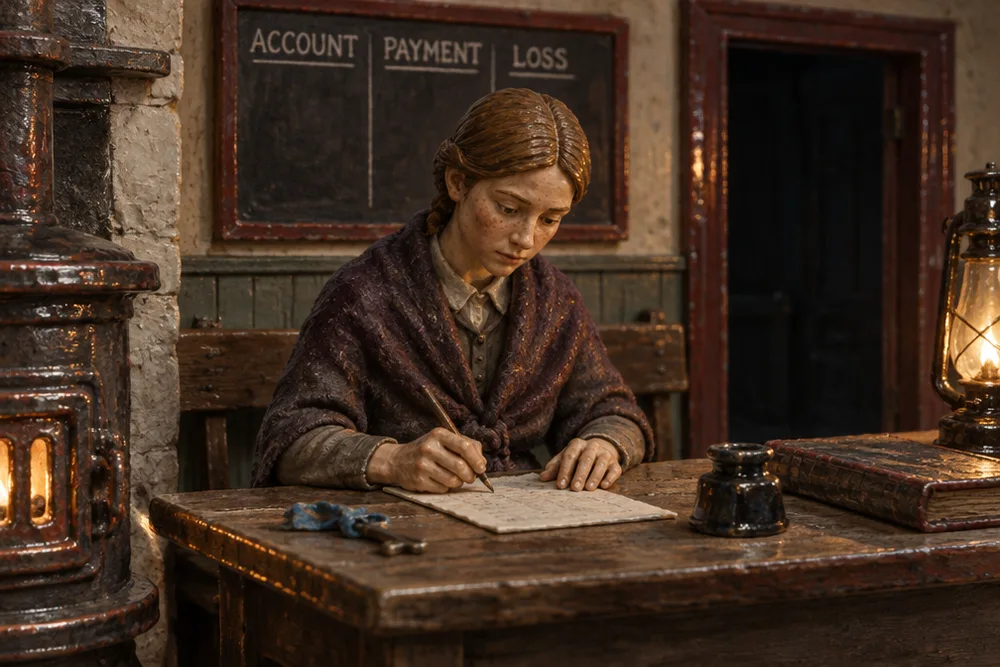
Zella turned to the register. Nell’s absence marks stood in a row, each one small and exact. She had not written a reason, and she would not now add one. But beside the unmarked line of the class’s work, she placed a fresh sheet for the next evening’s lesson: three headings, account, payment, loss.
Nell came to the next lesson late, carrying no paper. She sat by the stove and worked the examples with the others. When a pupil asked whether a person who had paid a bill always owned the account, she answered before Tilda could.
“No,” Nell said. “The kitchen purse paid for the coal. Mr. Rusk’s name is on the house account. He took the money from my wages.”
She stopped. The room had gone quiet, but no one leaned toward her.
“That’s all I’m saying,” she added.
“And that’s enough for this exercise,” Zella said. She pointed to the three headings on the board. “We don’t have to attach a name to understand the difference.”
Nell’s shoulders eased. She worked out the example, then checked her result against the figure on the slate. The deduction in her private record remained where it was, not in the brown ledger, not in the blue register, and not on the board.
Rusk did not come back that week. Orin told Zella only that he had asked whether the lessons were running on schedule. The stationmaster said yes. He did not volunteer what else had been asked, and Zella did not press him.
The class grew by two more pupils. One came from the north row and left when the crew train arrived; the other worked in a laundry and had never learned to divide a total. Zella adjusted the exercises so both could use them. Each night, she marked those present and those absent, then closed the register before the account papers came out.
Nell’s name continued to carry small dashes. Once, she attended the first half of class and had to leave for kitchen duty. Zella entered her present for the evening. She did not invent a fraction of attendance or write how long she had stayed. The register recorded what the class had agreed it recorded.