Night School for the Coal Bills
Chapter 3 · A Bench Turned Sideways
Page 29 of 261
Chapters
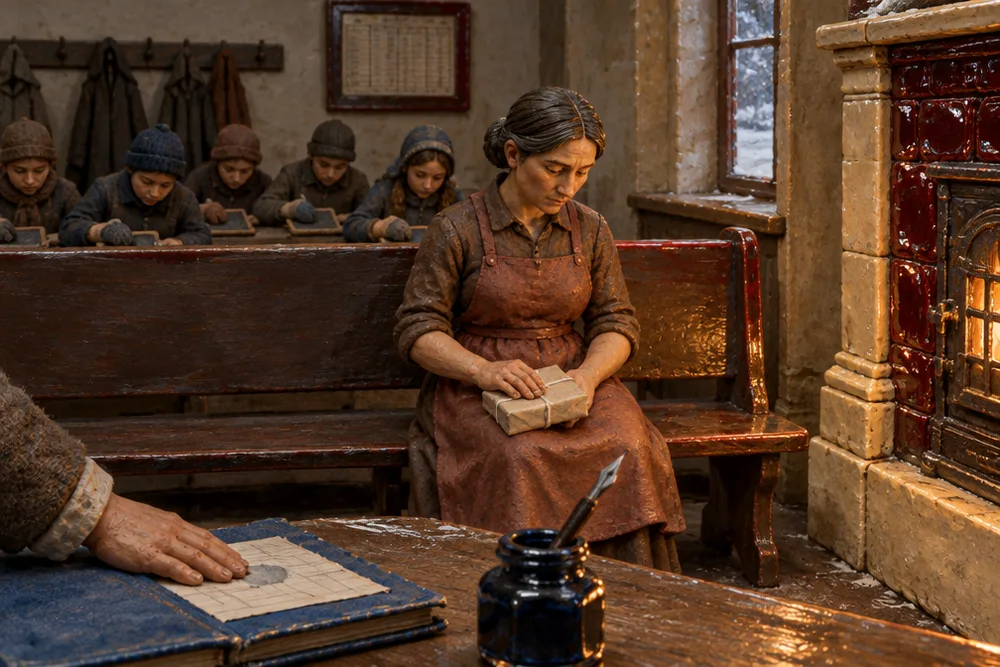
The ink jar had thawed, but the nib still caught at the first stroke. Zella Lind turned the blue-cloth register toward the stove and pressed the page flat with her wrist. A gray thumbprint darkened its first leaf, where the cold had made the paper cling to her skin. Behind her, six pupils worked their mittens over slate boards, rubbing away sums with the woolen thumbs.
“If you rub any harder, you’ll wear through to the lesson on the other side,” Zella said. Her mouth tightened around the overlapping edges of her upper teeth. She meant it lightly, but the room was so cold that even a joke sounded like a reprimand.
The depot’s oxblood trim held a thin shine in the lamplight. Beyond the ticket grille, the platform lay white and empty. Orin Voss had lent them the waiting room for the evening gap between trains, and each lesson seemed to occupy it on sufferance. Zella had learned to keep the register open, the chalk dry, and one ear for the rails.
Tilda Pesch sat near the end of the long bench, her rust apron gathered over her knees. The parcel she had brought rested unopened beside her. She had agreed to show the class one example, and no more—not until she could see what they intended to do with it. Zella had repeated that promise to herself on the walk over, as if a promise became safer when rehearsed.
“We’ll do the sums first,” Zella said. “Then we can see what the paper says.”
“The paper says what somebody wrote,” Tilda replied. She spoke without sharpness, but her hooded eyelid made her look as if she were weighing Zella’s words on a scale. “The sums may tell us whether it’s worth believing.”
Zella set out chalk and a slate. Her plan had been a tidy exercise: add two figures, carry a column, write the answer beneath. She had even made a problem about buying coal, thinking the pupils would recognize the numbers from their own household accounts. Now the prepared figures seemed too much like a guess dressed up as a lesson. She put the slate aside.
“All right,” she said. “You choose what we begin with.”
Tilda untied the parcel’s cord. Inside were several folded papers, softened at the creases from handling. She selected two and laid them down, keeping the rest beneath her palm. One was a paid slip from Cinder Gate Coal Yard; the other, a station account showing a charge settled later. Both bore the same delivery number and the same weight.