Night School for the Coal Bills
Chapter 2 · The Cord Around the Bills
Page 14 of 261
Chapters
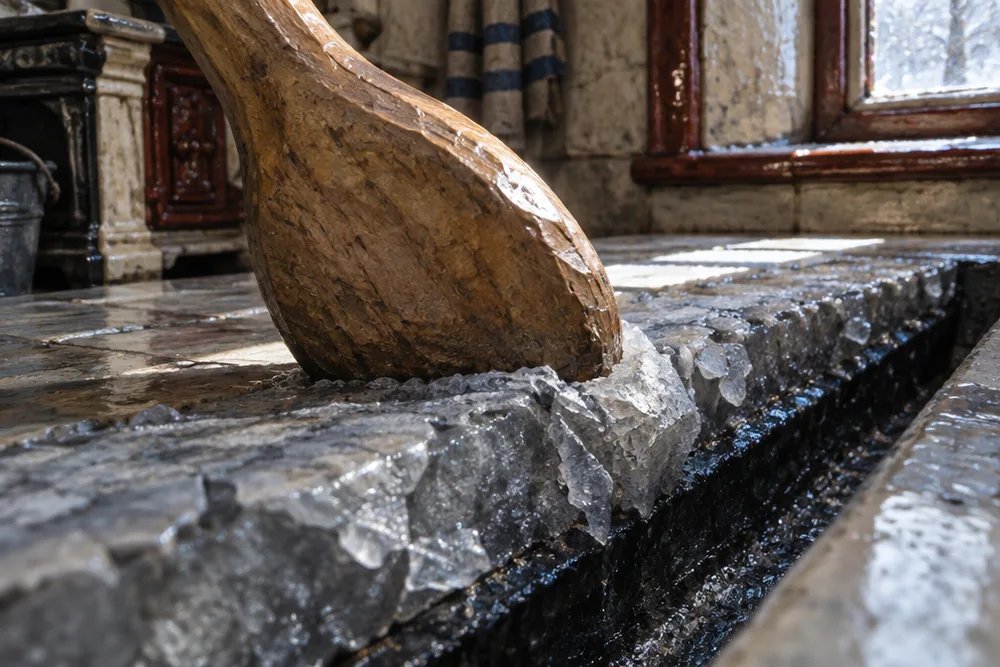
The washhouse drain had frozen into a gray ridge. Tilda chipped at it with the heel of a wooden spoon while the kettle hissed over the stove, then went back to the family’s sheets. They had brought two bundles: bedding, shirts, a child’s flannel nightdress. She had promised them clean by Friday and named a price without counting the coal she would burn to get there.
Now she wrote the figures on the back of a flour wrapper. Soap: six cents. Blueing and starch: two. Coal, she estimated, a bucket and a half. She paused over the last item. A bucket was not a measure the coal yard accepted, and neither was the warmth left in the stove after the wash was done. She had charged twenty-five cents. The soap and blueing alone took eight; the coal could take more than the rest.
She rubbed a wet thumb over the sum until the pencil blurred. The family had paid promptly, and she would not go to their door asking for another cent. But she could not keep pricing work by what people might bear. A widow’s hands were not a fuel supply.
On the shelf sat a folded bill from Cinder Gate Coal Yard. The amount was small enough that she had set it aside, then forgotten it beneath a parcel of mending. She pulled it free. The paper carried a delivery number and a date, and the charge had been entered on her monthly station account. There were more bills in the tin under the worktable. She had never arranged them together. A sum due, she had thought, was a sum due.
She finished the shirts by hand while the wringer stood empty, turning the question over as she worked. A coal charge was not the whole cost of heating water, any more than the number on a bill was the whole story of how a family had paid it. She knew that much from laundry. A customer might settle in cash, or bring a little at a time, or promise the balance after payday. The account could say one thing while the hands that had paid said another.
When the last shirt was hung, she took the tin from beneath the table. Bills and slips lay inside, folded small, some soft at their creases. She had kept them because she kept things that might be asked for later. At the time, she had not known what question to ask.