Night School for the Coal Bills
Chapter 8 · One Receipt Short
Page 103 of 261
Chapters
By the time Tilda reached the depot, the snow had turned to grit against her skirt and the hems of her customers’ sheets were still damp in her mind. At the washhouse, a woman had asked whether she could pay after Saturday. Tilda had said yes, then stood looking at the stove as if it might tell her what the next load of coal would cost. It had not. The stove only ate what she put into it.
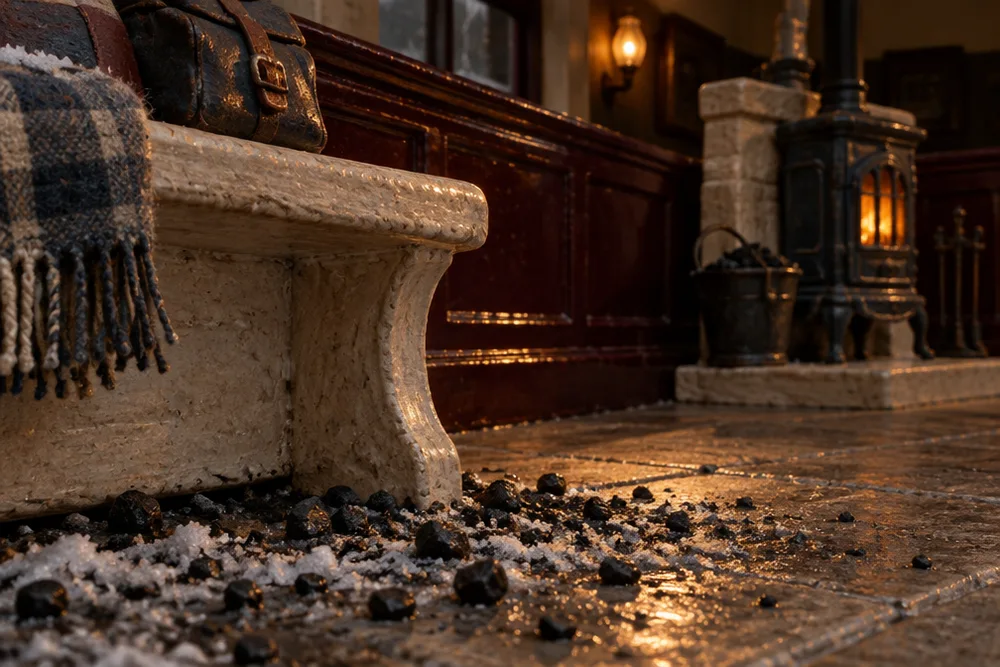
Alder Coulee’s depot windows were yellow against the dark. Inside, the oxblood trim held a little shine from the lamps, though the limestone footing and the floorboards wore a film of cinders tracked in from the platform. Orin Voss had left the waiting-room door unlatched for them. The connecting train was not due for another hour.
Zella Lind sat at the end of the long bench with the blue-cloth register open, her writing shoulder lowered over the page. She had thawed the ink jar near the stove. A dark thumbprint marked the first leaf. Six pupils had come; now two more were squeezing snow from their mittens beside the ticket grille. The blackboard still held the previous lesson’s sums.
Tilda laid her brown stitched ledger on the bench. Its cord was wound around the loose papers inside. She had brought the account that began with her own washhouse fuel, as agreed, and a few slips she had permission to show. A receipt thread looped over her wrist. “I’ve brought the figures,” she said. “Not the whole household.”
“That is what we settled,” Zella said. She shut the register enough to keep its pages from lifting in the draft. “We’ll start with your account, then anyone who has brought a paper can decide whether it comes out.”
Tilda took the end place at the bench. Her broad forearms were still pink from the washwater. She untied the cord. “Then let us make the coal answer for itself.”
The lesson began with Tilda’s washhouse arithmetic. She wrote three loads on a slate: one family’s linen, a boarder’s shirts, and a bundle of work aprons. The coal cost sat beside each, though the stove did not burn in three tidy portions. She divided the week’s fuel by the loads and showed where she had guessed too low.
“If I charge the shirts this much, I pay for their water and soap and lend the customer heat,” she said. “If I put the whole coal bill on the first family, they’ll be paying for the next two.”